

How to Verify Artisan Decor Authenticity
Table of Contents
- Step 1: Inspect Material Quality and Raw Materials
- Step 2: Identify Handcrafted Details and Imperfections
- Step 3: Ask the Seller About Production Methods
- Step 4: Check for Stamps, Stickers, and Maker Marks
- Signs of Authentic Handmade Decor vs. Mass-Produced Items
- Best Places to Buy Artisan Ceramics and Handcrafted Decor
- How to Spot Mass-Produced vs. Artisan Decor
- Common Counterfeit Red Flags and Digital Verification Tools
- Frequently Asked Questions
Last Updated: September 27, 2026
Step 1: Inspect Material Quality and Raw Materials
To verify artisan decor authenticity, begin with what you can touch and see. Real artisan decor uses genuine, often premium raw materials, not cheap substitutes.
Run your hands across the surface. Authentic handcrafted items feel different than mass-produced ones. You'll notice slight variations in thickness, weight distribution, and surface finish that reveal the maker's hand.
Check the material composition carefully:
- Wood: Look for grain variation, natural knots, and color inconsistency. Real wood ages and changes. Mass-produced items use uniform veneers or composite materials that look identical across multiple pieces.
- Ceramics: Feel the clay body. Authentic pottery has a slightly rough, porous texture. The glaze may have minor drips or uneven application, hallmarks of hand-finishing.
- Textiles: Examine weave density and thread quality. Hand-woven fabrics show color variations in the thread itself. Machine-made textiles have perfectly consistent color throughout.
- Metal: Real artisan metalwork shows hammer marks, patina variation, and weight that feels substantial. Lightweight metal that looks aged is often a red flag.
The Smithsonian's guide to material authenticity in decorative arts emphasizes that raw material quality directly reflects production methods. When artisans source premium materials, they're making an investment in their work.
For pieces at Che Bella Casa, like the 14" Mango Wood Bowl, you can immediately verify authenticity by examining the wood grain. Each piece shows natural variation in tone and grain pattern because it's crafted from solid mango wood, not veneer or composite. The hand-finished quality means no two bowls are identical.

Step 2: Identify Handcrafted Details and Imperfections
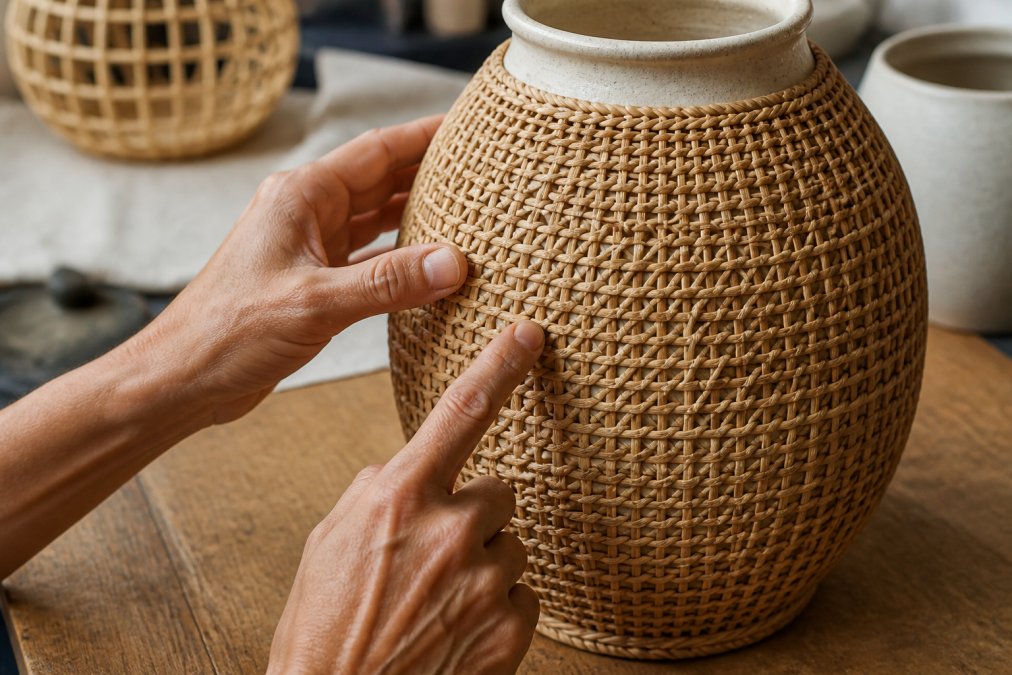
Perfection is the enemy of authenticity. The most reliable way to verify artisan decor authenticity is to look for the imperfections that prove human hands made the piece.
Examine these specific details:
- Stitching and seams: Hand-stitched items show slight irregularity in stitch length and spacing. Machine stitching is perfectly consistent. Look at seams on textiles, authentic hand-stitching varies slightly throughout.
- Surface irregularities: Handmade ceramics show finger marks, slight warping, and uneven glaze application. The bottom of a hand-thrown bowl often has trimming marks where the artisan cut it from the wheel.
- Weaving patterns: In hand-woven baskets or textiles, the weave will have minor inconsistencies. Some threads sit slightly higher or lower. This variation is proof of hand work.
- Paint or glaze application: Look for drips, color variation, or areas where the finish is slightly thicker in one spot. These aren't flaws, they're signatures.
- Joints and connections: In furniture or larger pieces, joints should show slight gaps or uneven spacing. Perfectly flush joints suggest machine assembly.
Imperfections aren't defects, they're evidence. When you see a slightly uneven glaze line on a ceramic vase or a thread that sits a millimeter higher in a weave, you're looking at proof that a person made this piece. Factory production eliminates variation through quality control; if every piece looks identical, it's mass-produced.
Step 3: Ask the Seller About Production Methods
Direct conversation reveals what mass-produced marketing hides. Ask specific questions about how the piece was made; the answers tell you everything.
Ask these questions:
- "Where is this piece made, and by whom?" A real artisan can name their location and often their name or workshop name.
- "How long does one piece take to create?" Handcrafted items require specific time investments. Mass production has different timelines.
- "What materials are used, and where do they come from?" Artisans know their supply chain. They can describe material sourcing.
- "Are there variations between individual pieces?" A confident artisan says yes. Mass production says no.
- "Can you show me your production process or workshop?" Legitimate artisans often share photos or videos. Counterfeiters can't.
Che Bella Casa curates items specifically chosen for their artisan traditions and quality craftsmanship.
A seller who gives vague answers or deflects questions is a red flag. Real artisans are proud of their work and want to discuss their process, materials, and decisions.
Step 4: Check for Stamps, Stickers, and Maker Marks
Authentic artisans mark their work as signatures and for traceability. Understanding what to look for separates real maker marks from fake ones.
Examine the piece for:
Brodi Decorative Hand-Woven Wicker →
- Maker's mark or signature: Hand-carved initials, stamped symbols, or signed names on the bottom or back of the piece. Real artisans identify their work.
- Date stamps or batch numbers: Some artisans date their pieces or assign batch numbers for traceability.
- Material labels: Legitimate sellers attach labels describing materials, origin, and care instructions. These should feel professionally applied, not hastily stuck on.
- Certification stickers: Fair trade, artisan cooperative, or regional origin certifications appear on authentic pieces. These are verifiable through the certifying organization.
Maker marks should be integrated into the piece, not added afterward. A signature carved into clay looks different from a label glued on later. If you see the same mark on multiple "different" pieces, it's likely a factory stamp, not an individual maker's signature.
Look for documentation that accompanies the piece. Certificates of authenticity, artist statements, or production information add credibility.
Signs of Authentic Handmade Decor vs. Mass-Produced Items
Understanding the differences between authentic artisan work and mass production helps you make confident purchasing decisions. Here's what distinguishes them:
| Characteristic | Authentic Handmade | Mass-Produced |
|---|---|---|
| Surface finish | Slight variations in color and texture | Perfectly uniform finish |
| Weight and balance | Feels appropriately substantial; may be slightly unbalanced | Lightweight or unnaturally balanced |
| Seams and joints | Visible irregularities; hand-stitched variation | Perfectly aligned; machine precision |
| Material consistency | Natural variations in grain, color, weave | Identical across all pieces |
| Pricing | Higher cost reflecting time and skill | Lower cost; volume production |
| Availability | Limited quantities; may be one-of-a-kind | Unlimited stock; identical pieces |
| Documentation | Maker information, certificates, provenance | Generic product descriptions |
| Patina and aging | Develops naturally based on use | Artificially applied uniformly |
The most reliable indicator is consistency across multiple pieces. Authentic artisan work shows natural variation; each piece has its own character. When you shop at Che Bella Casa, you're selecting from curated pieces specifically chosen for their artisan traditions.
Best Places to Buy Artisan Ceramics and Handcrafted Decor
Where you buy directly impacts authenticity. The right sources provide transparency, traceability, and genuine artisan products. The wrong sources offer counterfeits disguised as handcrafted items.
Direct from artisans: Buying directly from makers provides maximum transparency and the full story.
How to Spot Mass-Produced vs. Artisan Decor
Price point: Authentic artisan decor costs more because it reflects labor, skill, and material investment. If the price seems too low for the item's size and apparent quality, it's likely mass-produced. Fair pricing for handcrafted work typically starts higher than factory equivalents.
Common Counterfeit Red Flags and Digital Verification Tools
Counterfeiters create items that look handcrafted but are factory-made. Recognizing red flags protects you.
Red flags to watch for:
- Suspiciously low pricing for items claiming artisan origin
- Identical items across multiple sellers with different brand names
- Generic product descriptions lacking maker information or production details
- Artificial aging that looks uniform across all pieces
- Missing documentation or vague sourcing information
- Stock levels that never deplete despite claimed handcrafted production
- Seller inability to answer basic questions about production methods or materials
- Inconsistent quality between photos and delivered items
- Copied descriptions lifted from other sellers' listings
Digital verification tools:
Frequently Asked Questions
How can you tell if a product is handmade or mass-produced?
Handmade pieces show visible irregularities, inconsistent stitching or weaving, and unique imperfections that prove human craftsmanship. Mass-produced items display uniform patterns, perfectly symmetrical shapes, and identical finishes across multiple units. Check for maker marks, ask the seller about production methods, and examine the raw materials closely. Authentic artisan decor will have slight variations that make each piece one-of-a-kind, while factory items are designed for consistency and cost efficiency.
What are the hallmarks of authentic artisan craftsmanship?
Authentic artisan work includes hand-finished surfaces with visible tool marks, natural material variations, and thoughtful construction details. Look for patina development, evidence of hand-tooling, and documentation of the maker's background. Genuine artisanal pieces often feature maker marks, stamps, or signatures. The seller should provide information about production methods, materials sourcing, and the artisan's heritage. Handcrafted items typically cost more because they require skilled labor and premium raw materials, not mass-production efficiency.
Why is artisan decor more expensive than mass-market items?
Artisan decor commands higher prices due to ethical sourcing of raw materials, skilled labor, and small-batch production. Each handcrafted piece requires hours of work, quality control, and fair compensation for the maker. Mass-produced alternatives use cheaper materials, factory automation, and economies of scale. When you invest in authentic artisan pieces like the Brodi Decorative Hand-Woven Wicker Basket or the 14" Mango Wood Bowl, you're paying for durability, uniqueness, and the artisan's expertise, items designed to be treasured for years.
How do I verify artisan decor authenticity before purchasing?
Request detailed information about the piece's origin, production methods, and the artisan's background. Examine high-resolution photos for handcrafted details, imperfections, and material texture. Ask for maker marks or certification documentation. Research the seller's sourcing practices and reputation. Reputable sellers like Che Bella Casa provide transparent sourcing and detailed descriptions of artisanal techniques. Check if the piece shows patina or aging consistent with its claimed age, and cross-reference with historical catalogs if it's claimed to be vintage or antique.