

Authentic Artisan Mediterranean Home Decor Online
Table of Contents
- What Defines Authentic Mediterranean Home Decor
- Key Elements of Mediterranean Interior Design Trends
- How to Verify Authenticity in Artisan-Made Pieces
- Artisan-Made Ceramic Decor Brands and Direct-to-Artisan Platforms
- How to Style Mediterranean Home Decor in Your Space
- Regional Sub-Styles: Beyond the Generic Mediterranean Look
- Building Your Collection: From First Piece to Curated Retreat
- Conclusion
- Frequently Asked Questions
Last Updated: September 21, 2026
What Defines Authentic Mediterranean Home Decor
Authentic Mediterranean home decor isn't about buying items labeled "Mediterranean-style" at a big-box retailer. It's about sourcing pieces with genuine artisan heritage, regional character, and the kind of craftsmanship that shows in every detail. At Che Bella Casa, we've spent years curating collections that reflect what authentic Mediterranean design actually means: handcrafted textiles, ceramics made using heritage techniques, and sculptural pieces that feel collected rather than coordinated.
The difference between mass-produced "Mediterranean-inspired" decor and genuine artisan-made pieces comes down to intentionality. A handcrafted ceramic bowl carries the maker's fingerprints, literally. A hand-woven textile tells a story about the region it came from. These pieces have soul in a way that factory-made items simply cannot replicate.
True Mediterranean home decor draws from specific regional traditions: Moroccan zellige tilework, Greek blue-and-white pottery, Italian terracotta, Spanish wrought iron, and Portuguese azulejos. When you're shopping for artisan Mediterranean home decor, you're looking for items that honor these traditions rather than dilute them.
Key Elements of Mediterranean Interior Design Trends
Mediterranean interior design trends emphasize natural textures, earthy tones, and a curated aesthetic that feels lived-in rather than staged. The look is simultaneously relaxed and refined, coastal without being nautical, rustic without being rough.
The core elements that define this approach include:
- Earthy color palettes: Warm terracotta, soft ochre, weathered gray, sandy beige, and muted blues inspired by sea and sky
- Natural materials: Olive wood, linen, jute, hand-woven textiles, untreated stone, and natural ceramics
- Textural contrast: Smooth glazed ceramics paired with rough woven pieces, polished glass against raw wood, creating visual depth
- Coastal accents: Seashells, driftwood, and ocean-inspired sculptures used sparingly for sophistication
- Handcrafted ceramics: Blue-and-white painted pieces, terracotta vessels, and sculptural forms that show maker's marks
- Layered styling: Collections of objects, books, vessels, sculptures, arranged to feel organic rather than symmetrical
What separates current Mediterranean interior design trends from dated versions is restraint. A single handcrafted seahorse sculpture on a console with books and greenery reads as curated. Seven seahorses, three anchors, and a driftwood sign reads as theme-park decor. The trend now favors minimalist luxury: fewer pieces, higher quality, more intentional placement.

How to Verify Authenticity in Artisan-Made Pieces
This is where most buyers get stuck. How do you know a ceramic bowl is actually handmade by an artisan versus mass-produced in a factory and labeled "artisan-inspired"? The verification gap exists because marketing language is deliberately vague.
Start by asking specific questions before you buy:
- Where was this piece made? Legitimate sellers provide a specific country or region, not just "imported" or "handcrafted."
- Who made it? Some retailers can name the artisan or workshop. Others can at least identify the region's tradition.
- What technique was used? Hand-thrown ceramics, hand-woven textiles, hand-carved wood, these descriptions should be specific, not generic.
- Are there maker's marks? Look for signatures, stamps, or intentional imperfections that indicate human creation. Mass production creates uniformity; handcrafting creates variation.
- What's the return policy? Confident artisan retailers stand behind their pieces. If a seller won't accept returns on a high-value item, that's a red flag.
Physical inspection matters too. Hold the piece in person if possible. Does the weight feel substantial? Are the glazes uneven in ways that suggest hand-painting? Does the textile have the slight irregularities of hand-weaving? Mass production aims for perfection; artisan work celebrates intentional imperfection.
Price is also a verification tool. Authentic handcrafted Mediterranean home decor costs more than mass-produced alternatives because human labor and quality materials aren't cheap. If a ceramic piece or hand-woven textile is suspiciously inexpensive, it's likely not what the seller claims.
Artisan-Made Ceramic Decor Brands and Direct-to-Artisan Platforms
When sourcing artisan Mediterranean home decor online, you have two main paths: established retailers with curated collections, or direct-to-artisan platforms that connect you with makers.
Established retailers like Che Bella Casa have already done the verification work. We've sourced pieces from specific artisans and workshops, verified their techniques, and selected items that meet our standards for quality and authenticity. This means you're buying with confidence, the pieces have been vetted, and you have a single point of contact for questions or returns.
The advantage of curated collections is curation itself. Instead of hunting through thousands of items, you get a thoughtfully selected range where pieces are designed to work together cohesively. At Che Bella Casa, our collection emphasizes sculptural ceramics, hand-woven textiles, and coastal-inspired accents that share a design language. This makes it easier to build a room that feels intentional rather than random.
Direct-to-artisan platforms offer a different value: you're buying straight from the maker, often at lower prices, with the satisfaction of knowing exactly who created your piece. These platforms work well if you have time to research individual makers and don't mind the longer sourcing process.
For most buyers building a curated Mediterranean home decor collection, a mix of both approaches works best. Start with an established retailer to understand the aesthetic and quality standards you're after. Then, if you find a specific artisan or technique you love, explore direct platforms for deeper options.
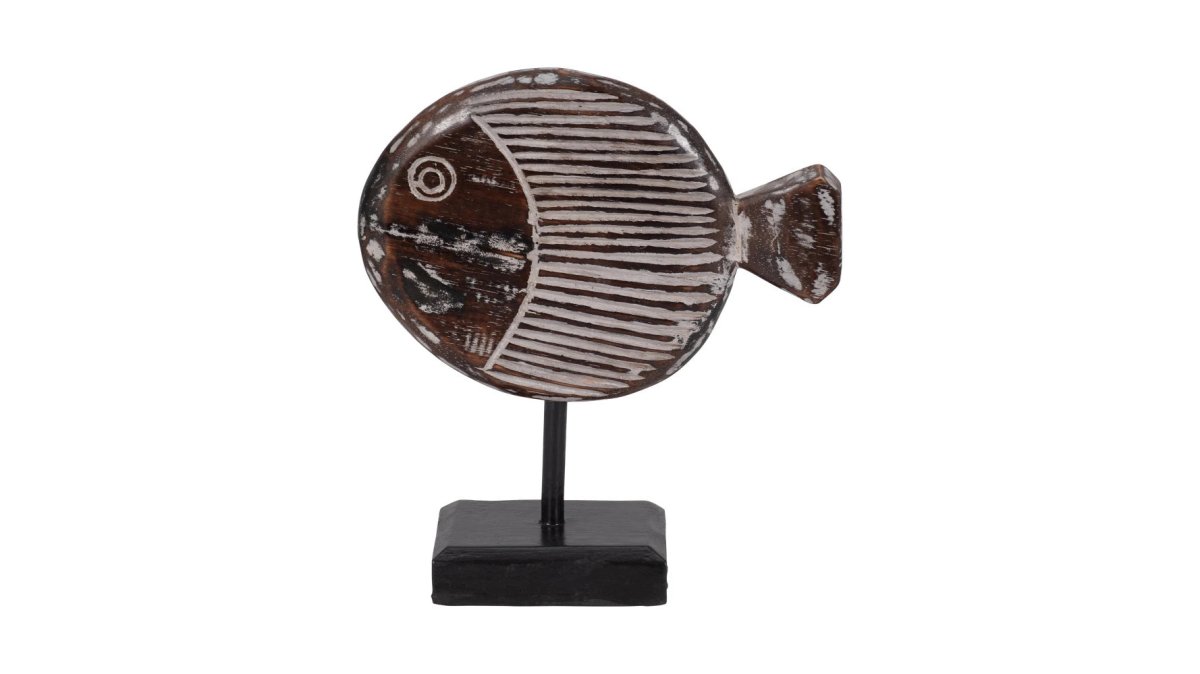
Portofino Blue Handcrafted Wood Fish →
Consider pieces like the Portofino Blue Handcrafted Wood Fish Sculpture on Mango Wood Base ($55.25), which combines the coastal aesthetic with genuine handcrafted detail, a blue glazed finish that mimics treasured market finds, paired with a natural mango wood base that adds warmth. This is the kind of piece that anchors a styled vignette without overwhelming it.

For sculptural impact, the Bellagio Murano-Style Art Glass Fish Sculpture ($115.00) elevates the coastal look into art territory. Handcrafted glass with layered color and a substantial presence, it works in contemporary, eclectic, or transitional interiors, not just coastal spaces.
How to Style Mediterranean Home Decor in Your Space
Styling authentic artisan Mediterranean home decor requires restraint and intentionality. The goal is a space that feels like you've collected pieces over time, not like you bought a matching set.
Start with a foundation of natural materials and earthy tones. Paint walls in warm neutrals, soft white, pale ochre, or weathered gray. Layer in natural wood furniture, linen upholstery, and woven textures. This creates a calm backdrop that lets your artisan pieces stand out.
Then, introduce your handcrafted accents strategically:
On console tables and shelves: Create a vignette by pairing a sculptural ceramic or wooden piece with stacked books, a simple glass vessel, and greenery. The Capri Natural Seashell Sculpture on Crystal Base ($115.00) works beautifully this way, the genuine seashell on a clear crystal base feels gallery-worthy without being pretentious.

On coffee tables: Use the Nantucket Textured Whale Sculpture ($99.00) as a focal point atop oversized coffee-table books.
Regional Sub-Styles: Beyond the Generic Mediterranean Look
Not all Mediterranean aesthetics are the same. Understanding regional sub-styles helps you source pieces that feel cohesive rather than like a generic "Mediterranean" collection.
Building Your Collection: From First Piece to Curated Retreat
Most people don't start with a fully designed Mediterranean home. Collections grow over time, piece by piece. Understanding how to build thoughtfully prevents you from ending up with a disjointed assortment.
| Collection Stage | Typical Pieces | Budget Range | Timeline |
|---|---|---|---|
| Foundation | 1-2 sculptural pieces | $50-$150 | Month 1 |
| Building | Add textiles, ceramics | $100-$300 | Months 2-3 |
| Layering | Introduce accents, candles | $50-$150 | Months 4-6 |
| Refinement | Fill gaps, swap pieces | Variable | Ongoing |
Conclusion
Finding authentic, artisan-made Mediterranean home decor online requires knowing what to look for and where to look. The difference between mass-produced "Mediterranean-style" items and genuine artisan pieces shows in every detail, the hand-painted ceramics, the natural variations in handwoven textiles, the sculptural character of wood that's been carved by human hands.
Frequently Asked Questions
How can I tell if home decor is truly artisan-made versus mass-produced?
Authentic artisan pieces show signs of handcraftsmanship: slight irregularities, visible texture variations, hand-painted details, and unique characteristics that repeat production cannot replicate. Look for seller transparency about sourcing and artisan credentials. Handcrafted items often cost more because they require skilled labor and individual attention. Ask sellers directly where pieces are made, who creates them, and whether each item is truly one-of-a-kind or part of a limited run. Mass-produced items typically have uniform perfection, standardized finishes, and vague sourcing claims.
What are the key elements of Mediterranean interior design?
Mediterranean design centers on natural materials, earthy tones, and coastal influences. Essential elements include terracotta and hand-painted ceramics, olive wood and weathered finishes, organic textiles like linen and jute, and sculptural accents inspired by the sea. Incorporate woven baskets, blue-and-white color palettes, and textural contrast through layering different materials. The style balances minimalist luxury with warmth, avoiding over-themed or nautical excess. Focus on quality over quantity, curating pieces that feel collected and intentional rather than decorative clutter.
Where can I find high-quality handmade ceramics and artisan decor online?
Seek out direct-to-artisan platforms and curated retailers that specialize in authentic handcrafted pieces. Che Bella Casa offers a carefully selected collection of artisan-made Mediterranean home decor, including hand-painted ceramics, handcrafted sculptures, and natural materials sourced for quality and authenticity. Look for sellers who provide detailed sourcing information, artisan backgrounds, and transparent pricing that reflects genuine craftsmanship. Verify that retailers partner directly with makers rather than reselling mass-produced items labeled as artisan.
How do I know if Mediterranean decor will work in my modern home?
Mediterranean style blends seamlessly with modern interiors when you focus on neutral palettes, sculptural simplicity, and organic materials rather than obvious nautical themes. Handcrafted pieces like the Portofino Blue Handcrafted Wood Fish Sculpture ($55.25) or Bellagio Murano-Style Art Glass Fish Sculpture ($115.00) work as gallery-inspired accents in contemporary spaces. Layer Mediterranean elements gradually, start with one statement piece, add natural textiles, then incorporate earthy ceramics. The key is restraint: one sophisticated artisan sculpture says refined taste; multiple themed pieces read as overdone.