

Artisan vs Mass-Produced Home Decor: Quality & Value
Table of Contents
- Artisan vs Mass-Produced Home Decor: Key Differences
- How to Identify Quality Craftsmanship in Furniture
- Durability and Longevity: Handmade vs Factory-Made
- Benefits of Handmade Home Decor
- Best Places to Buy Artisan Ceramics and Handcrafted Pieces
- Cost Comparison: Is Artisan Decor Worth the Investment?
- Integrating Artisan Pieces Into Your Home
- Frequently Asked Questions
Last Updated: October 2, 2026
Artisan vs Mass-Produced Home Decor: Key Differences
The choice between artisan and mass-produced home decor shapes not just how your space looks, but how it makes you feel. At Che Bella Casa, the difference becomes clear quickly: artisan vs mass produced home decor represents two fundamentally different approaches to how we live with objects. One prioritizes individuality, craftsmanship, and intention. The other optimizes for accessibility, consistency, and speed.
Understanding these differences isn't academic. It affects your budget, your home's durability, and whether the pieces you buy will still resonate with you in five years. Below, we'll show you exactly how to identify quality craftsmanship, evaluate real value, and integrate artisan pieces into your space.
Defining Craftsmanship and Artisanal Production
Artisanal production means a skilled maker, or small team of makers, creates each piece by hand, with intention and care. These aren't assembly-line products. A ceramicist throws each bowl on a wheel. A woodworker hand-selects timber and cuts joinery. A textile artisan dyes fabric and weaves it on a loom. The maker's experience, judgment, and hands are embedded in the final object.
This approach means variation is built in. No two handmade vases are identical. The slight irregularities in a hand-painted plate aren't flaws, they're signatures of the maker's touch. This distinctiveness is precisely what makes artisan pieces feel alive in a space.

Mass-Market Manufacturing and Factory Production
Mass-produced decor follows a different logic: standardization, efficiency, and volume. Factories use molds, machines, and assembly lines to create thousands of identical pieces quickly. A ceramic plate is cast in a mold, painted by machine, and glazed in a kiln with hundreds of others. Furniture is assembled from pre-cut components using fasteners and adhesives designed for speed, not longevity.
Factory production excels at consistency and affordability. You know exactly what you're getting. Prices stay low because labor and materials are optimized for cost. But this efficiency comes with trade-offs: limited uniqueness, shorter lifespans, and a feeling of interchangeability that many homeowners eventually find unsatisfying.
How to Identify Quality Craftsmanship in Furniture
The ability to spot genuine craftsmanship separates informed buyers from those who simply trust marketing claims. Real artisan work shows itself in specific, observable ways. Here's what to look for.
Materials and Construction Methods
Quality craftsmanship starts with material selection. Artisan makers choose materials deliberately. A woodworker sources timber for grain, color, and stability, not just cost. They understand how wood moves with humidity and season their pieces accordingly. A ceramicist selects clay bodies for workability and fired strength, not just availability.
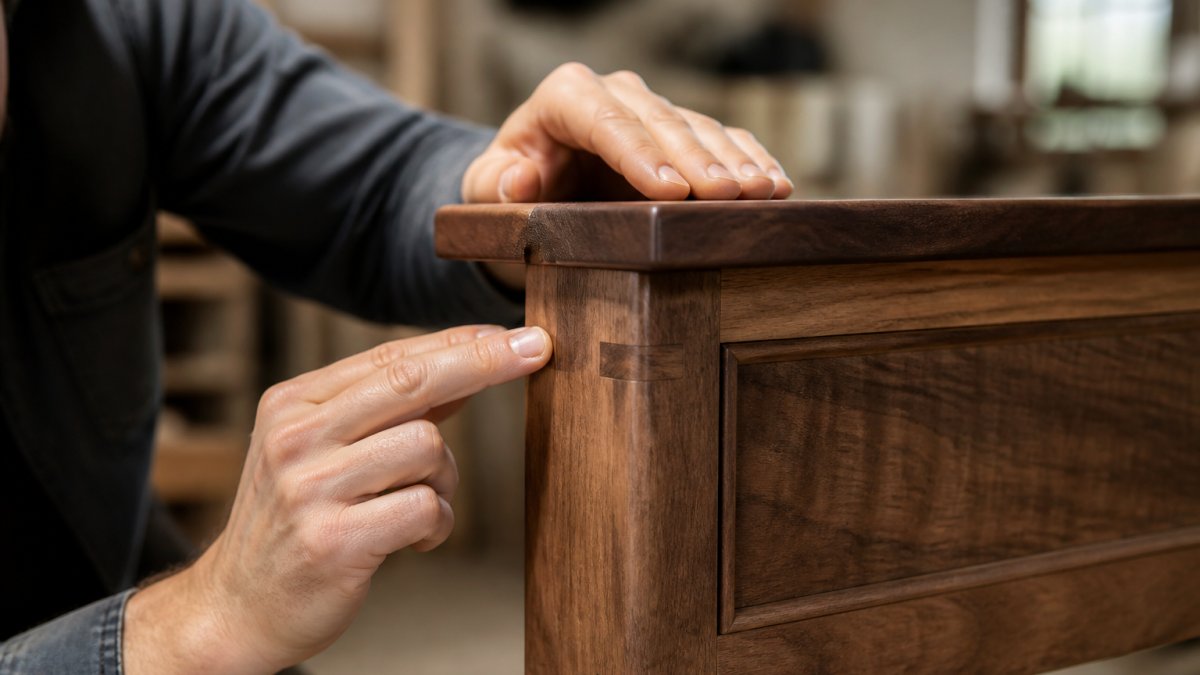
Look at how pieces are joined. Hand-cut joinery, mortise and tenon, dovetail, box joints, indicates time and skill. These connections hold for decades. Factory furniture often uses dowels, pocket holes, or staples designed for assembly speed, not longevity. Run your hand along joints. Gaps, rough edges, or visible fasteners suggest mass production.
Finish quality matters too. Hand-applied finishes, waxes, oils, natural stains, develop character over time. Machine-applied polyurethane or lacquer creates a uniform, plastic-like surface that doesn't age gracefully. Ask makers about their finishing process. Transparency here is a trust signal.
Authenticity Verification and Sourcing Transparency
Before committing to a high-value artisan piece, verify the claim. Real artisans are happy to discuss their process. Ask where materials come from. Do they source responsibly? How long have they been making work? Can they show you their studio or workshop?
Reputable sellers provide maker information with every piece. You should know the artisan's name, location, and background. If a retailer can't or won't share this, it's a red flag. Mass-produced items marketed as "artisan" or "handcrafted" often hide vague sourcing because the claim isn't true.
Look for certifications or third-party verification when relevant. Some artisans belong to maker collectives or craft associations. These memberships carry accountability. When shopping online, check return policies and guarantees. Authentic artisans stand behind their work.
Durability and Longevity: Handmade vs Factory-Made
This is where the artisan vs mass produced comparison becomes financial. A handmade piece made from quality materials and solid construction often outlasts three or four mass-produced alternatives.
Handcrafted furniture built with traditional joinery and natural finishes actually improves with age. Wood develops patina. Copper develops patina. Ceramics, textiles, and glass gain character. These pieces become more beautiful, not less. They're designed to be repaired, a loose joint can be re-glued, a finish can be refreshed, a broken handle can be replaced.
Factory-made pieces follow a different arc. Particleboard swells when wet and breaks down over years. Stapled joints fail. Machine-applied finishes chip and flake. When these pieces break, repair is often impossible or costs more than replacement. They're designed to be disposable.
Consider the math: a handmade table at $2,400 used for 30 years costs $80 per year. A mass-produced table at $600 lasting five years costs $120 per year. The artisan piece wins on cost-per-year, not to mention the intangible value of living with something you genuinely love.
Decorative Handmade Paper Mache Vase →
Benefits of Handmade Home Decor
Sustainability and Responsible Material Sourcing
Artisan production is inherently more sustainable than factory manufacturing. Makers typically work with local or carefully sourced materials. A ceramicist might source clay from a regional supplier. A woodworker selects timber from responsibly managed forests. A textile artisan uses natural dyes and fibers chosen for durability.
This contrasts sharply with mass production, which often relies on synthetic materials, chemical dyes, and supply chains optimized purely for cost. Factory furniture frequently uses materials like particleboard (made from wood waste and chemical binders), polyurethane foam, and vinyl, all designed for low cost, not environmental responsibility.
Handmade pieces also generate less waste. Artisans typically work with minimal scraps, and the pieces they create last longer, meaning fewer replacements over a lifetime. The Decorative Handmade Paper Mache Vase from Che Bella Casa exemplifies this: crafted with eco-friendly materials and artisanal methods, it's built to endure while respecting the environment.

Supporting Local Artisans and Small Businesses
When you buy handmade, your money supports skilled makers in your region or communities worldwide. You're funding people who've chosen to master a craft rather than work in factories. This supports cultural heritage, traditional techniques that might otherwise disappear.
Artisans reinvest in their communities. They buy local materials, hire apprentices, and create gathering spaces around their work. Mass production concentrates wealth in corporate supply chains far removed from consumers.
Uniqueness and Emotional Connection
Handmade pieces carry meaning that factory goods rarely achieve. You own something no one else has. This distinctiveness, the slight variation in glaze, the individual character of a weave, the specific grain pattern in wood, creates emotional attachment.
Over time, this matters more than you might expect. Living with objects you love, objects that feel unique to your life and aesthetic, transforms how you experience your home.
Best Places to Buy Artisan Ceramics and Handcrafted Pieces
Finding authentic artisan work requires knowing where to look. Direct-from-maker sources, artist websites, studio open houses, craft markets, offer the best selection and pricing. You meet the maker, see their process, and support them directly.
Cost Comparison: Is Artisan Decor Worth the Investment?
Price Differences and What You're Paying For
Here's what that premium covers:
Materials: Artisans source higher-quality inputs. Real wood instead of particleboard. Natural fibers instead of synthetics. These materials cost more and perform better.
Lifecycle Value and Resale Potential
Handmade pieces hold value in ways factory goods don't. A vintage handcrafted table, if well-maintained, often sells for close to its original price. A mass-produced table loses value immediately and continues declining.
Integrating Artisan Pieces Into Your Home
Styling Handcrafted Decor in Modern Spaces
The fear many homeowners express is that artisan pieces won't fit modern interiors. This misconception comes from conflating "handmade" with "rustic" or "old-fashioned." Quality artisan work is timeless, not dated.
Care and Maintenance Differences
Handmade pieces often require different care than factory goods, but this care is usually simpler and more rewarding.
Frequently Asked Questions
What does 'artisan decor' actually mean?
Artisan decor refers to home furnishings and accessories handcrafted by skilled makers using traditional techniques and quality materials. Unlike mass-produced items made by machines in factories, artisan pieces are individually created with intention and attention to detail. Each handmade item is unique, no two are identical, because they're shaped by human hands rather than standardized molds. Artisan work emphasizes craftsmanship, cultural heritage, and often incorporates sustainable or responsibly sourced materials. The term encompasses everything from hand-painted ceramics to hand-woven textiles to custom copper fixtures.
How can you tell the difference between artisan and mass-produced items?
Authentic artisan pieces show visible signs of handwork: slight irregularities in shape, hand-painted brushstrokes, natural material variations, and unique finishing details. Mass-produced items display uniform perfection, identical patterns, and smooth machine-finished surfaces. Examine construction methods, artisan furniture often features traditional joinery (mortise and tenon joints), hand-stitched upholstery, or hand-applied finishes, while factory pieces use staples, glue, and spray coating. Check materials: artisan makers typically use solid wood, natural fibers, and responsibly sourced materials, whereas mass-market decor relies on veneers, synthetic fabrics, and composite materials. Request sourcing information; genuine artisan makers can trace their supply chain and identify the craftsperson.
Is artisan home decor worth the higher price point?
Artisan decor commands premium prices because of superior durability, uniqueness, and ethical production. A handcrafted piece typically lasts decades with proper care, while mass-produced items may need replacement in 5-7 years, making the per-year cost comparable or lower. Artisan pieces appreciate emotionally and often hold resale value better than disposable furniture. If you value individuality, sustainability, and supporting skilled makers, the investment reflects meaningful home curation rather than consumption. However, if your budget is limited or your style frequently changes, mass-produced options may suit your needs better.
What are the environmental benefits of choosing handcrafted decor?
Handmade home decor typically has a smaller environmental footprint than mass-produced alternatives. Artisan makers often use sustainably sourced or reclaimed materials, avoid synthetic chemicals in finishes, and produce in small batches rather than bulk manufacturing. Factory production consumes significant energy, generates textile waste, and often relies on synthetic materials that don't biodegrade. Handcrafted pieces are designed for longevity, reducing the cycle of replacement and disposal. Supporting artisanal production also preserves traditional skills and reduces demand for industrial manufacturing, which lowers overall carbon emissions and pollution from large-scale operations.