

Ceramic Decor for European Homes: 5 Best Pieces to Buy
Last Updated: November 12, 2026
Quick Summary
The five best ceramic decor pieces for European homes are the Ricco Deruta Cachepot Planter at $388.00, the Ricco Deruta Rooster Pitcher at $98.00, the Chinoiserie Ginger Jars at $62.99, the Lupe Vase at $117.98, and the Handpainted Stripe Bud Vases at $30.00. Together they cover statement, table, shelf, and small-space styling at every budget.
- The Ricco Deruta cachepot measures 14 inches in diameter by 11 inches high.
- The rooster pitcher holds 1 liter and stands 10 inches high.
- The ginger jar trio comes in heights of 16.5, 14.5, and 12.5 inches.
- The bud vases stand 4.75 inches tall and are dishwasher, oven, and microwave safe.
- Drilled cachepots are not returnable, so confirm pot size before ordering drainage.
Table of Contents
- Why Ceramic Decor Belongs in European-Style Homes
- Quick Comparison: The Five Best Ceramic Decor Pieces
- 1. Ricco Deruta Luxury Cachepot Planter: The Statement Piece
- 2. Ricco Deruta Rooster Pitcher: Italian Table Character
- 3. Green & Cream Chinoiserie Ginger Jars: The Collected Silhouette
- 4. Lupe Vase: Quiet Sculpture for Modern Rooms
- 5. Handpainted Stripe Bud Vases: Small Pieces, Big Impact
- How European Pottery Styles Shape Your Choices
- Frequently Asked Questions
Why Ceramic Decor Belongs in European-Style Homes
The European home decor market is estimated at USD 218.49 billion in 2026 and projected to reach USD 287.48 billion by 2034, according to Market Data Forecast's Europe home decor analysis. That scale tells you something: ceramic decor is not a niche accent in European homes. It is the backbone of the look.
At Che Bella Casa, we curate pieces that carry that same sensibility into American homes: artisan traditions, hand-finished surfaces, and forms that outlast trends. Ceramic decor earns its place because it does three things at once. It adds texture where flat surfaces feel cold. It brings color without demanding a repaint. And it holds history, which is why an estimated 185 million pieces of porcelain traveled from East Asia to Europe between 1550 and 1800, per The Ceramics of Eurasia report.
Below, we rank the five best ceramic decor pieces for European homes, with real prices, honest trade-offs, and placement guidance for each.
Quick Comparison: The Five Best Ceramic Decor Pieces
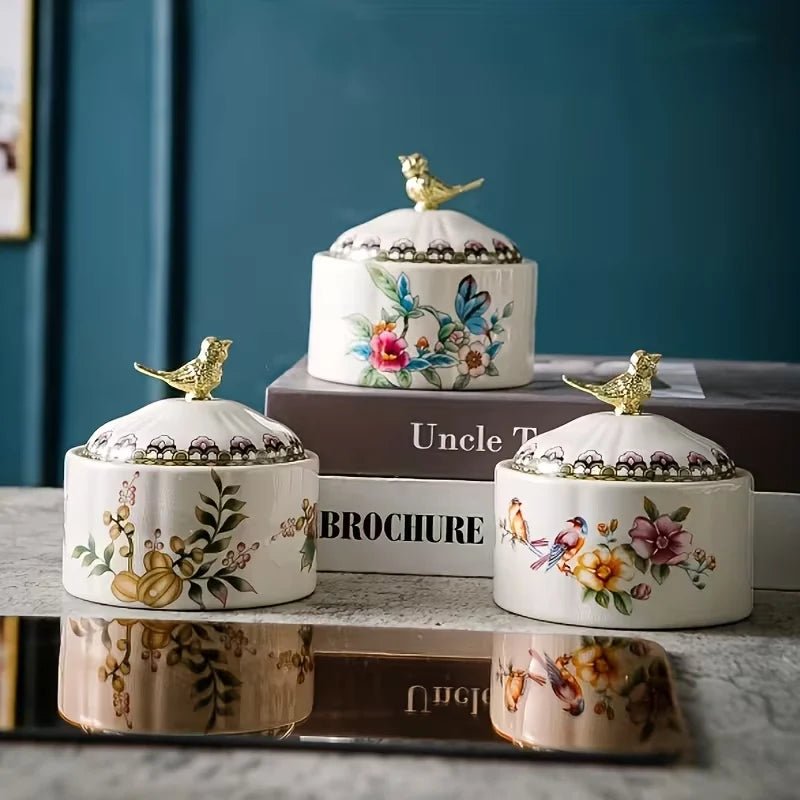
Here is the short version before the detail. Each piece below works alone, but they also mix well: a bold Deruta statement, a folkloric pitcher, a collected ginger jar, a quiet sculptural vase, and a small handpainted bud vase. The table gives you price and fit; the notes under it give you the buying criteria that decide whether a piece earns its place.
| Piece | Price | Best For | Standout Quality | Care Note |
|---|---|---|---|---|
| Ricco Deruta Cachepot Planter (Large) | $388.00 | Entryway or hearth statement | Hand-painted Maiolica from Deruta, Italy | Wipe with damp cloth; drilled versions not returnable |
| Ricco Deruta Rooster Pitcher | $98.00 | Dining table character | Food-safe glaze, 1-liter multi-use pitcher | Not microwave-safe; ceramic gets very hot |
| Chinoiserie Ginger Jars (3 sizes) | $62.99 | Console and shelf styling | Crackled glaze, coordinating trio | Test watertightness before filling |
| Lupe Vase | $117.98 | Modern minimalist rooms | Soft matte finish, sculpted silhouette | Dry base after filling to avoid rings |
| Handpainted Stripe Bud Vases | $30.00 | Small-space and gift styling | Lead-free, dishwasher safe, one-of-a-kind | Dishwasher, oven, and microwave safe |
Price
How to read the price column. The range here, $30.00 to $388.00, is deliberate. Under $50 buys personality and giftability: the bud vases are the entry point, and a pair or trio builds a tabletop moment without a big commitment. The $60 to $120 band is the styling workhorse zone: the ginger jar trio and the Lupe Vase do the most visual work per dollar because they suit shelves, consoles, and bedside tables.
Buying criteria that matter more than the photo. First, material and glaze: food-safe glazes matter only if you will serve from the piece, so do not pay a premium for food safety on a purely decorative vase. Second, durability: hand-painted surfaces tolerate damp cloths but not abrasive scrubbers, and matte glazes show water marks more than glossy ones. Third, scale: measure the furniture the piece will sit on before ordering, because a 14-inch cachepot overwhelms a narrow console and a 4.75-inch bud vase disappears on a large mantel. Fourth, care: dishwasher-safe pieces like the bud vases suit daily use, while hand-painted Maiolica rewards hand washing.
Value trade-offs, stated plainly. The cachepot is the only piece here where you are buying a story as much as an object; if provenance does not matter to you, a plain planter does the same job for less. The pitcher is the best dual-purpose buy because it serves and decorates. The ginger jar trio is the best value per visual impact, since three coordinated pieces cost less than one statement piece. The Lupe Vase is the pick for rooms that need calm rather than color.
Watch out: drilled cachepots are not returnable, so confirm your plant's pot size before you order drainage, and test any crackle-glazed jar for watertightness before using it as a vase.
1. Ricco Deruta Luxury Cachepot Planter: The Statement Piece
Our top pick is the Ricco Deruta Luxury Cachepot Planter in the large size, and it is the piece we would build a room around. At $388.00, it measures 14 inches in diameter by 11 inches high, so it holds a real floor plant or a substantial orchid without disappearing.
What makes it worth the price is provenance. This is Maiolica from Deruta, Italy, hand-painted in the Ricco pattern, which the listing says dates to the 16th century and echoes the frescoes of Pietro Perugino. The palette, royal blue, yellow gold, and emerald green, is the reason it reads as collected rather than purchased. You can request bottom drainage at checkout if you plan to plant directly.
Best for: anyone who wants one memorable piece that anchors an entryway, hearth, or covered patio. Skip if: your room is strictly minimalist. This piece wants to be the loudest object in the space.
Watch out: drilled cachepots are not returnable, so confirm your plant's pot size before you order drainage.
2. Ricco Deruta Rooster Pitcher: Italian Table Character
If the cachepot is the anchor, the Ricco Deruta Rooster of Fortune pitcher is the personality. It holds 1 liter, stands 10 inches high, and is glazed with 100% food-safe colors, so it moves from serving water at dinner to holding olive branches on a sideboard.
The rooster motif is a Deruta tradition, and each pitcher arrives with a card explaining the Rooster of Fortune legend. That detail matters if you are buying a hostess gift. At $98.00, it sits in the range where a useful object and a decorative one overlap.
Best for: dining tables, kitchen open shelving, and gifts that need a story. Skip if: you need microwave-safe serveware. The ceramic can get very hot, so we recommend keeping it out of the microwave.
3. Green & Cream Chinoiserie Ginger Jars: The Collected Silhouette
European interiors have borrowed from Asian ceramics for centuries, and this trio proves why. The Green & Cream Chinoiserie ginger jars come in three heights, 16.5, 14.5, and 12.5 inches, with a crackled glaze that mimics the fine crazing of antique porcelain.
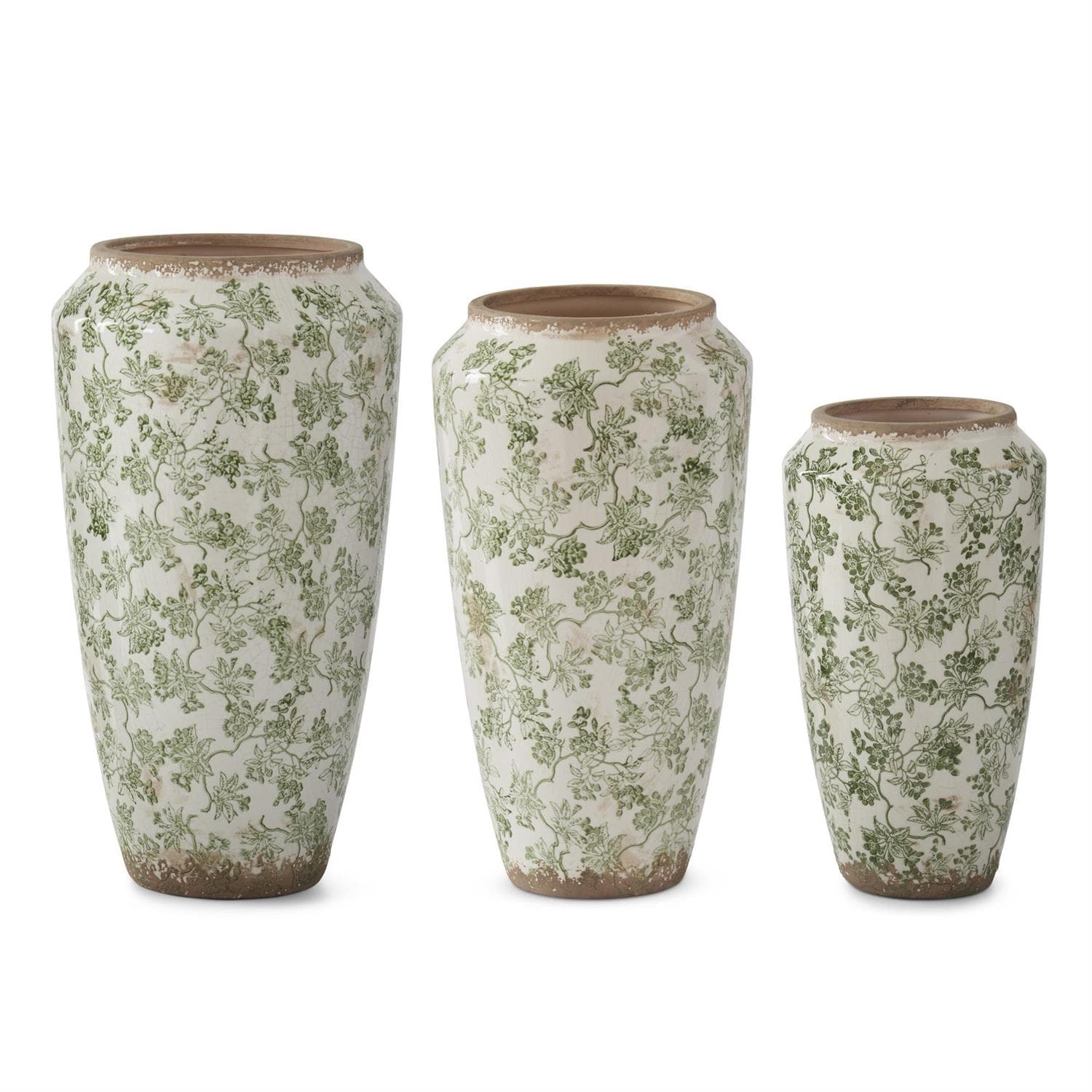
At $62.99 for the set, this is the most versatile buy on the list. Style all three together on a console for instant entryway impact, split them across built-ins, or flank a mantel with the two smaller sizes. The soft green and cream palette works in traditional, transitional, and modern farmhouse rooms.
Best for: readers who want the collected-over-time look without hunting for years. Skip if: you prefer glossy, uniform finishes. The crackle texture is the point.
4. Lupe Vase: Quiet Sculpture for Modern Rooms
Not every European home is ornate. If yours leans contemporary, the Lupe Vase is the pick. Its sculpted silhouette nods to classical forms, but the soft matte glaze and muted, sun-washed tones keep it firmly modern.
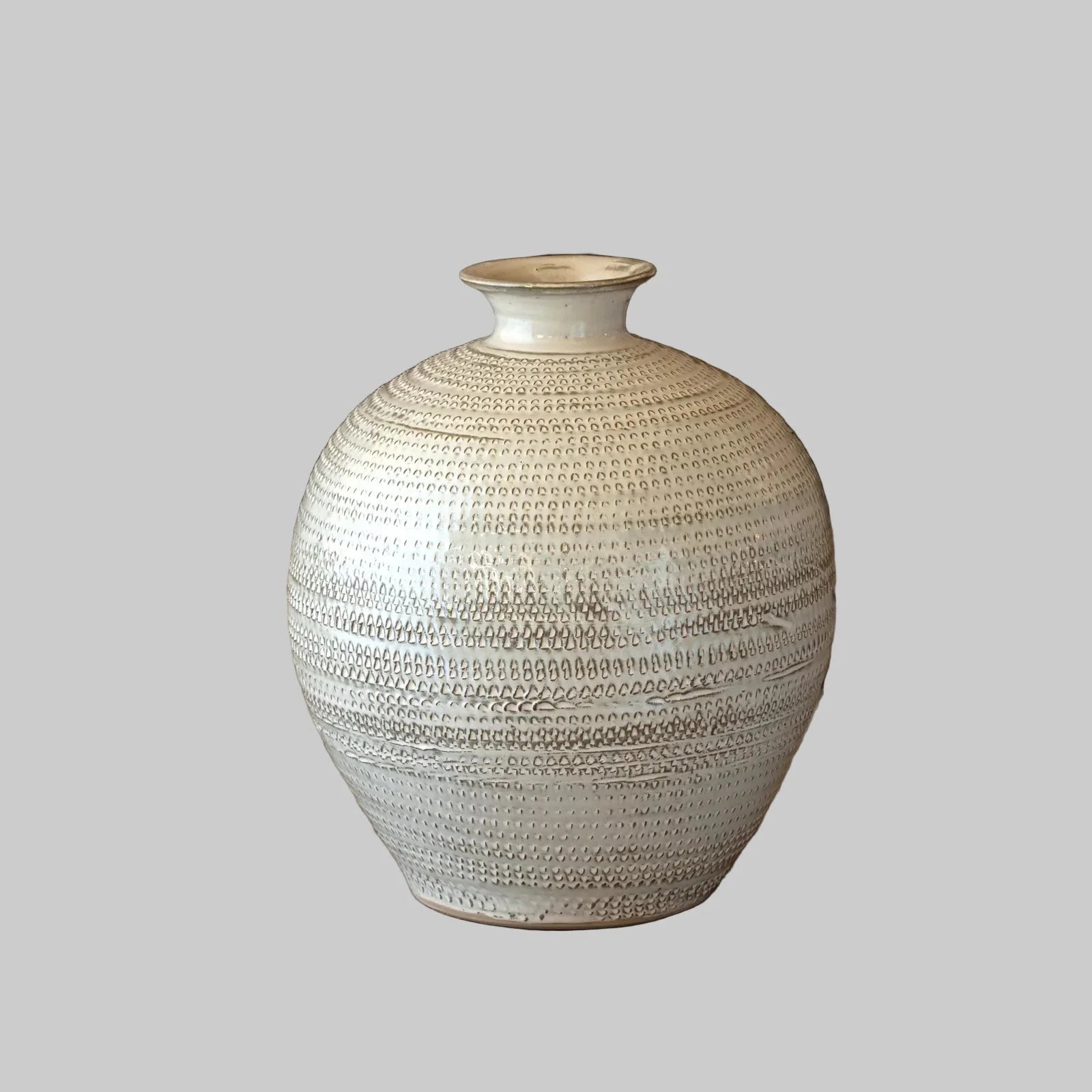
At $117.98, it earns its price through range. A single sculptural stem looks intentional. An abundant seasonal bouquet looks effortless. It reads as an art object even when empty, which is the test most vases fail.
Best for: minimalist living rooms, bedside tables, and entryways that need calm rather than color. Skip if: you want pattern. This piece makes its point through form alone.
5. Handpainted Stripe Bud Vases: Small Pieces, Big Impact
Small ceramics are where European homes show their personality, and these handpainted stripe bud vases do it for $30.00. Each stands 4.75 inches tall with vertical stripes painted by artisans in India, and because they are hand-painted, no two are identical.
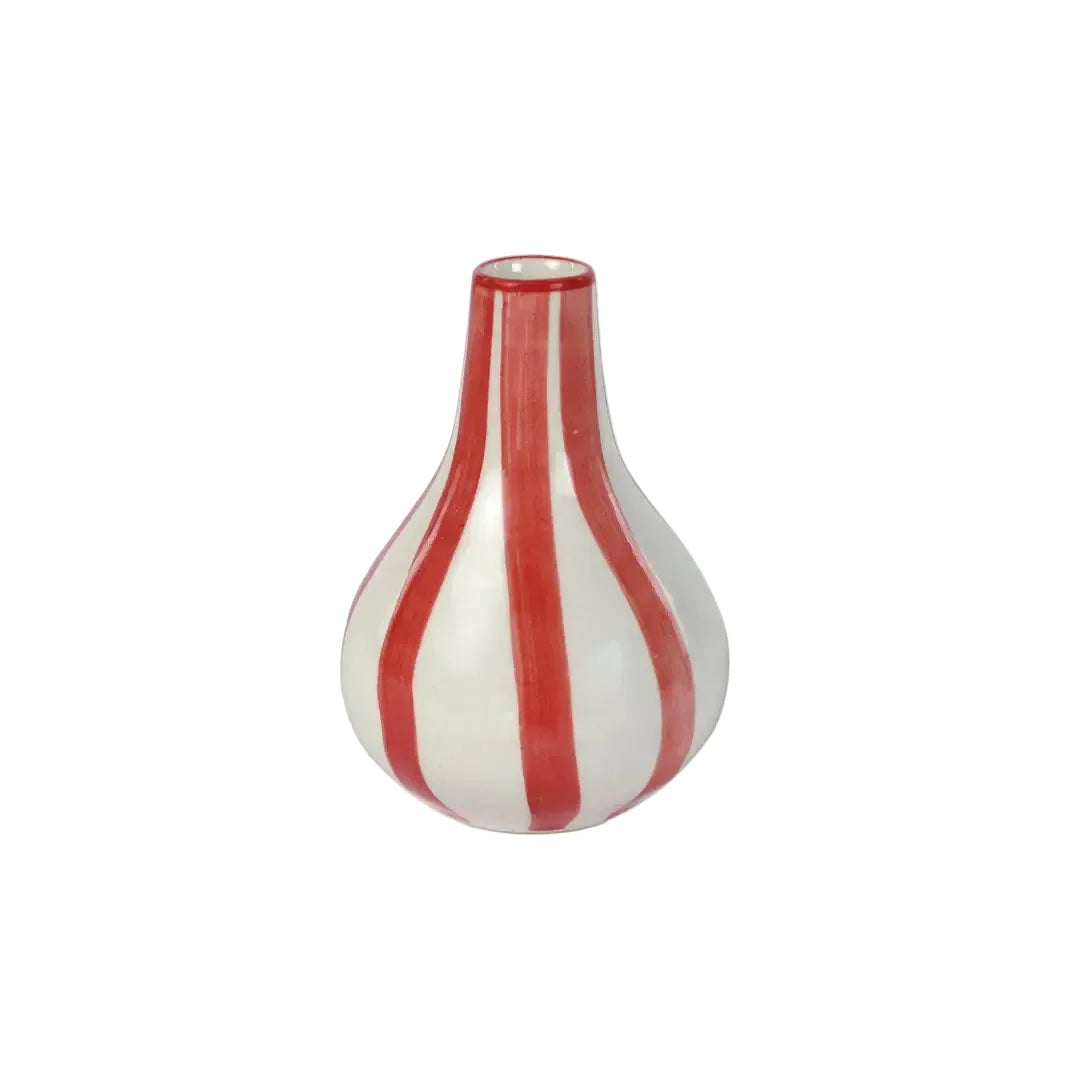
They are also genuinely practical: lead-free and safe for the dishwasher, oven, and microwave. Cluster three down a table runner, or place one on a guest room nightstand with a single sprig. The matching yellow version lets you build a pair.
Best for: small spaces, shelf styling, and gifts under $50. Skip if: you need a large floral vessel. This is a single-stem piece by design.
How European Pottery Styles Shape Your Choices
European decor is not one look, and the fastest way to buy the wrong ceramic is to treat it as one.
French country and cottage. Think soft cream, aged white, and faded green, with hand-thrown forms and a little imperfection.
Italian and Mediterranean. Saturated color, scrollwork, and a willingness to let one object be the loudest thing in the room. This is the home of the Ricco Deruta cachepot and rooster pitcher.
Scandinavian and modern. Muted glazes, sculptural silhouettes, and restraint. The Lupe Vase is the anchor here, with its soft matte finish and muted tones. A single stem looks intentional; a full bouquet looks effortless.
Traditional and transitional. This is where mixing works best, but only if the pattern languages agree.
Scale and placement rules that travel across styles. A cachepot or floor vessel should be roughly one-third the height of the furniture it sits beside. Console groupings work in odd numbers, with the tallest piece off-center.
Material, glaze, and care. Check vintage or imported pottery before serving from it.
Sourcing and provenance. The European market for ceramic dinnerware continues to grow, with nearly half of imports arriving from developing countries, per CBI's ceramic dinnerware market analysis. Ask where a piece was made and by whom.
Frequently Asked Questions
What are the main European pottery styles to know before buying ceramic decor?
The styles you'll see most often in European homes are Italian Maiolica (also called Majolica), known for bright hand-painted scrollwork and floral motifs; French faience, which leans toward softer palettes and rustic country patterns; and Portuguese azulejo-inspired blue-and-white work. Chinoiserie ginger jars, though Asian in origin, became a fixture of European interiors through centuries of trade. Each style carries its own color register, so pick one as your anchor and let the others support it.
How do I style ceramic vases for home decor without cluttering a room?
Group in odd numbers and vary the heights. A common rule is the 3-5-7 principle: three objects at different heights on a console, five on a larger mantel, seven across a long shelf. Keep one piece as the focal point and let the others recede. Empty vessels work as sculpture; a single stem in a bud vase often reads more considered than a full bouquet. Leave breathing room between groupings so each ceramic piece has its own space.
What ceramic home decor items work best in a Mediterranean-style home?
Cachepot planters, pitchers, and hand-painted tabletop pieces carry the Mediterranean look most convincingly. Look for warm neutrals, sun-washed glazes, and patterns drawn from Renaissance or coastal traditions. A large Deruta-style planter holding an olive tree or citrus plant anchors a corner; a rooster pitcher on a dining table adds character without shouting. Pair ceramics with relaxed linens, warm woods, and textured finishes so the room feels collected rather than staged.
Is handmade ceramic decor safe to use with food and drinks?
It depends on the glaze. Some traditional pottery glazes or decorations may contain lead, so confirm before using a piece for food. Before using any decorative ceramic for food, confirm the maker states it uses food-safe glazes and colors. Pieces intended purely as decor, such as ginger jars or sculptural vases, don't need food-safe certification, but anything you'll serve from should carry that assurance.
How do I mix handmade ceramics with modern decor?
Let contrast do the work. A sculptural matte vase like the Lupe Vase sits comfortably beside clean-lined modern furniture because its silhouette is simple even though its surface is organic. Keep the palette tight, two or three tones at most, and repeat one material elsewhere in the room. One hand-finished piece per surface usually reads as intentional; three or more can tip into clutter unless they share a color family or shape language.
