

How to Style Terracotta Tiles in Modern Homes
Last Updated: November 21, 2026
Quick Summary
Style terracotta tiles in modern homes by treating them as an accent or feature wall rather than a whole-room treatment, pairing them with clean-lined furniture, creamy tones or muted greens, and natural textures like jute, rattan, and linen. Choose matte or unglazed finishes in larger formats with simple layouts, and seal the tile before use.
- Bring three or four loose tiles home and view them against your wall color at three times of day.
- North-facing rooms receive cool light that can make terracotta look dull or brown.
- Use terracotta as a backsplash behind the range rather than covering the entire kitchen floor.
- Choose matte or unglazed finishes, larger formats, and straight or herringbone layouts for a modern result.
- Clean terracotta with a pH-neutral cleaner, never harsh acids or vinegar, which etch the surface and strip sealer.
Table of Contents
- Why Terracotta Tiles Belong in Modern Homes
- What Colors Go With Terracotta Tiles
- How to Modernize Terracotta Floor Tiles
- Terracotta Tile Kitchen Ideas That Feel Current
- Terracotta Floor Living Room Ideas
- Choosing Tile Size, Finish, and Layout
- Sealing, Care, and Everyday Performance
- Shop Artisan Terracotta Accents for Your Space
- Frequently Asked Questions
Why Terracotta Tiles Belong in Modern Homes
Terracotta tiles are having a genuine moment, and not the kitschy kind. Design publications now list warmth, texture, and authenticity as the defining notes of current interiors, with terracotta among the materials leading that shift, according to Clay Imports' interior design trend report.
The appeal is simple. Terracotta brings earthy tones and natural textures that cool, sleek finishes cannot match. It grounds a room. It ages well. And it pairs beautifully with the clean lines of contemporary furniture.
But here is what most guides get wrong: terracotta is not a whole-room commitment. The best modern applications treat it as an accent or a deliberate feature wall, not a blanket treatment. We will show you exactly how to pull that off, room by room.
What Colors Go With Terracotta Tiles
The best colors for terracotta tiles are creamy tones, soft whites, and muted greens, with bold contrast reserved for smaller moments. Warm colors from the same family also work, as long as you vary the depth. What separates a modern result from a dated one is not the palette itself but how the tile's undertone behaves under the room's actual light.
Terracotta is not one color. It ranges from pale apricot and salmon to deep rust and brown-red, and each tile carries an undertone that shifts the whole scheme. A tile with an orange undertone warms cream walls toward yellow; a tile with a purple-red undertone can make the same cream read pink.
Neutral Palettes That Let Terracotta Breathe
Creamy tones and soft whites keep terracotta from feeling heavy. Pair a warm tile floor with off-white walls, a linen sofa, and a woven rug. Add a natural wood coffee table and one large plant. The room reads calm, not cold.
The mechanism matters: a warm tile floor reflects warm light upward, so walls in the same temperature family (cream, oat, greige) blend into a continuous wash, while a cool white wall creates a visible seam where the floor meets the baseboard. For a deeper room-by-room approach, our guide on luxury home decor color matching walks through how to build these palettes space by space.
Bold Contrasts for a Contemporary Edge
For a sharper look, try a black-and-white palette around the tile. Black metal frames, a charcoal cabinet, or a dark stone countertop creates color contrast that feels current. Keep bold moves to one or two pieces so the tile still feels like the star.
Contrast works best when it is deliberate rather than scattered. A single black window frame, a matte black faucet, or a charcoal island against terracotta reads as a designed choice; black in five unrelated places reads as noise. Muted greens, olive, sage, deep forest, are the other reliable contrast because they share terracotta's earthy base and keep the room from feeling like a color-block exercise. Avoid pure primary colors near terracotta; they compete rather than complement.
Lighting and Undertone: The Variable Most Guides Skip
Daylight, artificial light, and the tile's own undertone decide the perceived color more than the paint chip does. North-facing rooms receive cool, blue-shifted light that can make terracotta look dull or brown; south- and west-facing rooms receive warm light that intensifies the orange.
Testing samples under both the room's daylight and its evening bulbs before ordering is worthwhile, because tile is often sold in batches and returns can be difficult once installation begins. If you cannot test in the room, order a single box and view the tiles against your wall paint in direct sun and in shade.
How to Modernize Terracotta Floor Tiles
You modernize terracotta floor tiles by pairing them with clean-lined furniture, layered natural textures, and a restrained color scheme. The tile stays; the styling around it does the modernizing.
A common mistake is filling the room with matching rustic pieces. That is what makes terracotta feel dated. Instead, mix in sleek finishes: a glass table, slim metal legs, a tailored linen slipcover.
- Swap heavy wood furniture for lighter, open frames
- Add organic materials like jute, rattan, and raw linen
- Keep decor minimal and let the floor breathe
- Introduce one sculptural piece for contrast
The Nordroom's styling guide recommends balancing bright-color combinations against an all-natural look. Both directions work; the key is committing to one. If texture is your focus, our guide on mixing textures in living rooms goes deeper on layering.
Terracotta Tile Kitchen Ideas That Feel Current
Terracotta tile kitchen ideas work best when the tile is treated as a feature wall or backsplash, not the entire floor. A warm backsplash against sleek finishes looks fresh and grounded.
Pair terracotta with wood cabinetry in a light finish and stone countertops in cream or honed gray. Open shelving with simple ceramics keeps the look airy. Avoid busy patterns on nearby surfaces; let the tile carry the texture.
- Use terracotta as a backsplash behind the range
- Combine with white or cream cabinetry for contrast
- Add open wood shelves and matte ceramics
- Keep hardware simple, in black or aged brass
Watch out: sealing a kitchen backsplash properly matters more than sealing a floor. Grease and steam find every unsealed pore, so confirm the finish before installation.
Terracotta Floor Living Room Ideas
Terracotta floor living room ideas center on warmth and balance. A sunlit room with warm tile underfoot, a cream linen sofa, and a natural wood coffee table feels both cozy and refined.
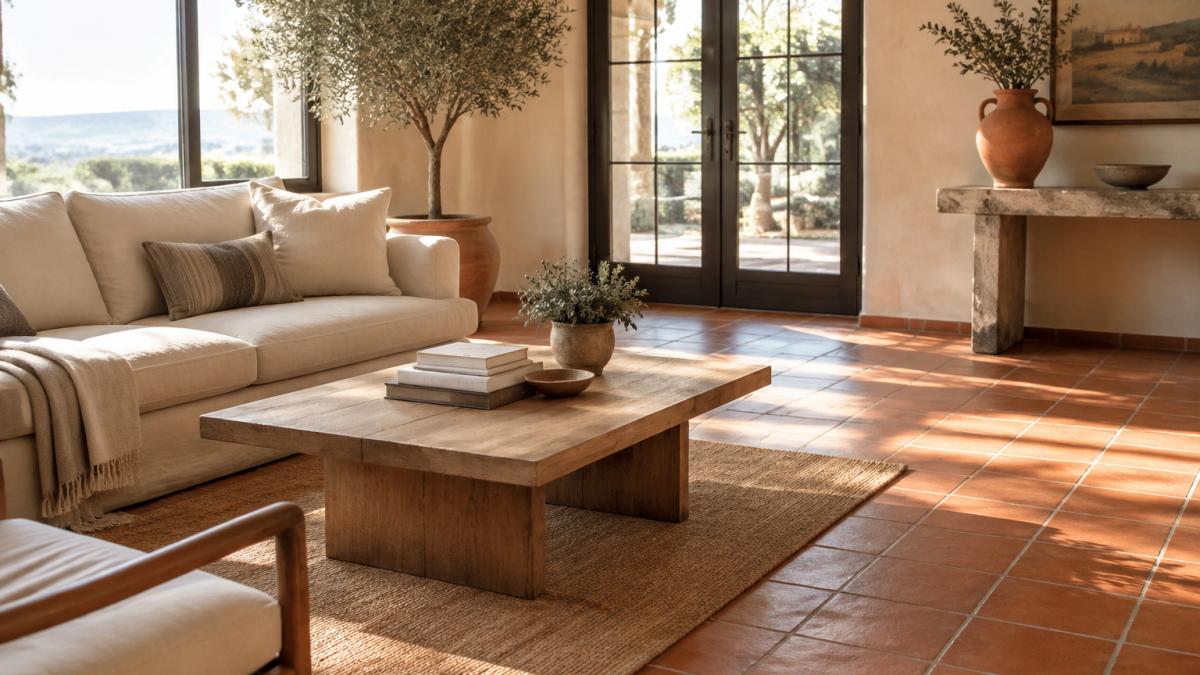
Layer in natural textures through a jute rug, linen curtains, and a woven basket. Add greenery with a large plant or olive tree. Our guide on styling Mediterranean decor in modern homes shows how these elements come together in a contemporary living room.
Choosing Tile Size, Finish, and Layout
Tile size, finish, and layout decide whether terracotta reads modern or dated. Choose matte or unglazed finishes, larger formats, and simple layouts for a contemporary result.
| Choice | Modern Pick | Why It Works |
|---|---|---|
| Finish | Matte or unglazed | Soft, natural look; less glossy |
| Size | Larger formats | Fewer grout lines, cleaner feel |
| Layout | Straight or herringbone | Simple, timeless patterns |
| Color | Warm, varied tones | Adds depth without busyness |
| Grout | Close to tile tone | Blends and softens the grid |
A 2026 design guide advises choosing matte or unglazed finishes and limiting terracotta to accent areas rather than covering entire rooms, per the 2026 terracotta design guide. That restraint is what keeps the look current.
Small rooms and open-plan transitions deserve extra thought. In a small space, use a lighter tile and a simple layout to avoid visual clutter. In open-plan homes, repeat the tile in connected areas so the floor flows rather than stops.
Sealing, Care, and Everyday Performance
Sealing and care keep terracotta performing well in daily life. Terracotta is porous, so a quality sealer protects it from stains and moisture while preserving its matte character. The practical decisions, which sealer, how often, and what the tile does underfoot, are where most styling guides stop and where a livable floor is actually won.
Choosing a Sealer
Terracotta is typically sealed with one of two families: a penetrating sealer, which soaks into the pore structure and leaves the surface looking natural, or a topical film-forming sealer, which builds a protective coating and can add a slight sheen or deepen the color. Penetrating sealers are a common choice for a modern matte look because they do not change the tile's appearance. Topical sealers offer more stain resistance but can scuff, peel, or yellow over time.
Watch out: sealing a kitchen backsplash properly matters more than sealing a floor. Grease and steam find every unsealed pore, so confirm the finish before installation and choose a sealer rated for wet, greasy environments rather than a floor-only product.
Resealing and Daily Care
- Seal before use, and reseal as the finish wears
- Test water beading: if a drop no longer beads on the surface, the sealer is due
- Wipe spills promptly, especially oils and wine
- Sweep or vacuum regularly to protect the surface from grit
- Use felt pads under furniture legs
- Clean with a pH-neutral cleaner, never harsh acids or vinegar, which etch the surface and strip sealer
Grout deserves its own attention. Unsealed grout can absorb oil and dye and become difficult to clean once stained. A grout color close to the tile tone hides the grid and softens the look, while a contrasting grout makes the layout a design feature, decide before installation, because changing it later means removal.
Comfort, Safety, and Performance
For comfort and accessibility, add rugs in high-traffic spots and keep transitions between rooms flush. These small choices make a beautiful floor a livable one, especially in homes with pets and kids.
Slip resistance varies with finish, and matte or unglazed surfaces are generally more grippy than polished ones, which matters in kitchens, bathrooms, and entryways. None of these choices change how the floor looks, but together they decide whether it works for the household that lives on it.
Shop Artisan Terracotta Accents for Your Space
You do not need to retile a room to bring terracotta in. Artisan accents let you test the look and add warmth instantly.
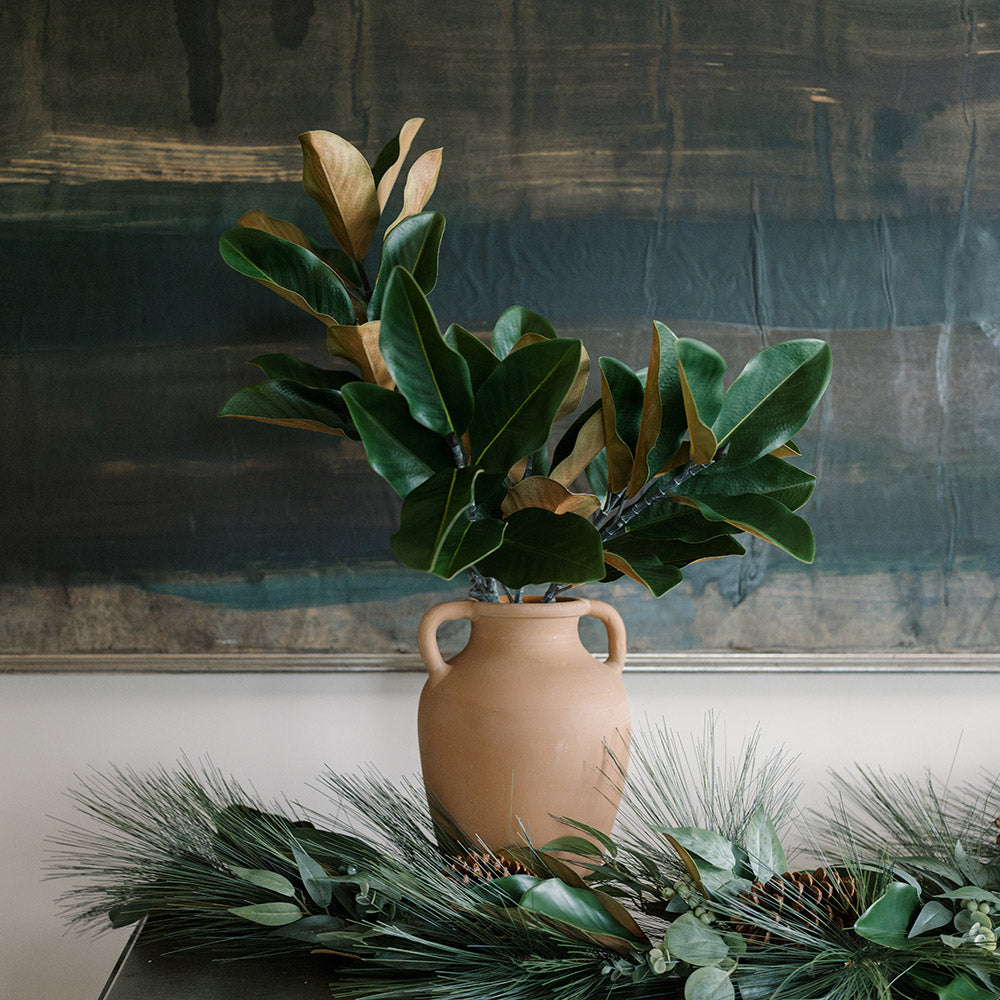
Our 12" Terracotta Vase with Handles is handcrafted by artisans and works as a standalone centerpiece or a vessel for fresh stems. Pair it with a textured pot on a console for layered warmth.
For readers convinced terracotta belongs in a modern home, our guide on styling Mediterranean home decor shows how the full look comes together.
Terracotta only looks dated when it is overdone. Style it with restraint, pair it with clean lines and natural textures, and it becomes one of the warmest, most timeless materials in the home.
Frequently Asked Questions
Can terracotta tiles work in a modern home?
Yes. The key is balancing their warmth with clean lines and contemporary finishes. Choose matte or unglazed tiles, keep grout lines tight and consistent, and pair them with neutral walls, natural wood, and a few sculptural accents. Limiting terracotta to floors or an accent wall rather than covering every surface keeps the look current. A handcrafted terracotta vase or planter, like the Wren Terracotta Planter with Rattan Handles, ties the material into the rest of the room without overwhelming it.
What colors go well with terracotta tiles?
Terracotta tiles pair beautifully with creamy whites, soft beige, and warm neutrals that let the earthy tones stand out. For contrast, deep charcoal, black, and muted sage green create a contemporary feel. Natural wood tones and stone countertops add texture without competing. In kitchens and bathrooms, white walls and wood cabinetry keep the palette fresh, while a black-and-white scheme with terracotta floors delivers a crisp, modern look.
How do you modernize old terracotta floor tiles without replacing them?
Start by deep cleaning and resealing the tiles to restore their color. Then update the surrounding elements: paint walls in a creamy white or soft neutral, swap heavy curtains for linen, and introduce sleek furniture with clean lines. A large jute or wool rug breaks up the expanse of tile, and a few sculptural ceramics or a terracotta vase add cohesion. These changes shift the room's feel without the cost of new flooring.
What furniture and materials pair well with terracotta floors?
Natural materials work best: oak and walnut furniture, linen and cotton upholstery, woven rattan, and stone or marble accents. Keep furniture silhouettes simple so the floor remains the focal point. Add greenery in terracotta planters, like the Textured Terracotta Pot, to echo the floor's warmth. Avoid overly ornate pieces and cool-toned metals, which can clash with terracotta's earthy undertones.
