

High-Quality European-Inspired Furniture: Where to Find It
Table of Contents
- What Makes European-Inspired Furniture Stand Apart
- How to Identify Quality Furniture: What Separates Artisan from Mass-Produced
- Made-to-Order Furniture: Customization and Authenticity
- Mediterranean-Style Furniture Collections
- Vintage European Furniture: Authentic Pieces with History
- Scandinavian and French Country Aesthetics
- Investment Pieces That Endure
- Frequently Asked Questions
Last Updated: October 20, 2026
What Makes European-Inspired Furniture Stand Apart
If you want high-quality, European-inspired furniture that doesn't look mass-produced, you want authenticity: genuine artisan craftsmanship, not factory pieces marketed as "European-inspired." At Che Bella Casa, the difference is immediate once you know what to look for.
European-inspired furniture carries a philosophy mass production rejects: quality materials, intentional design, and visible marks of human skill. A handcrafted wooden table shows grain variation and storytelling joinery; a factory piece shows uniformity and plastic-looking finishes.
True European-inspired furniture draws from centuries of design traditions: Scandinavian minimalism, French country elegance, Italian luxury, and Mediterranean warmth.
How to Identify Quality Furniture: What Separates Artisan from Mass-Produced
Most buying guides say to "check the joints" and "feel the weight", useless advice in a showroom or on a product page. Here are the specific, checkable tests makers, restorers, and upholsterers use, organized by the five components that determine whether a piece lasts 30 years or 5.
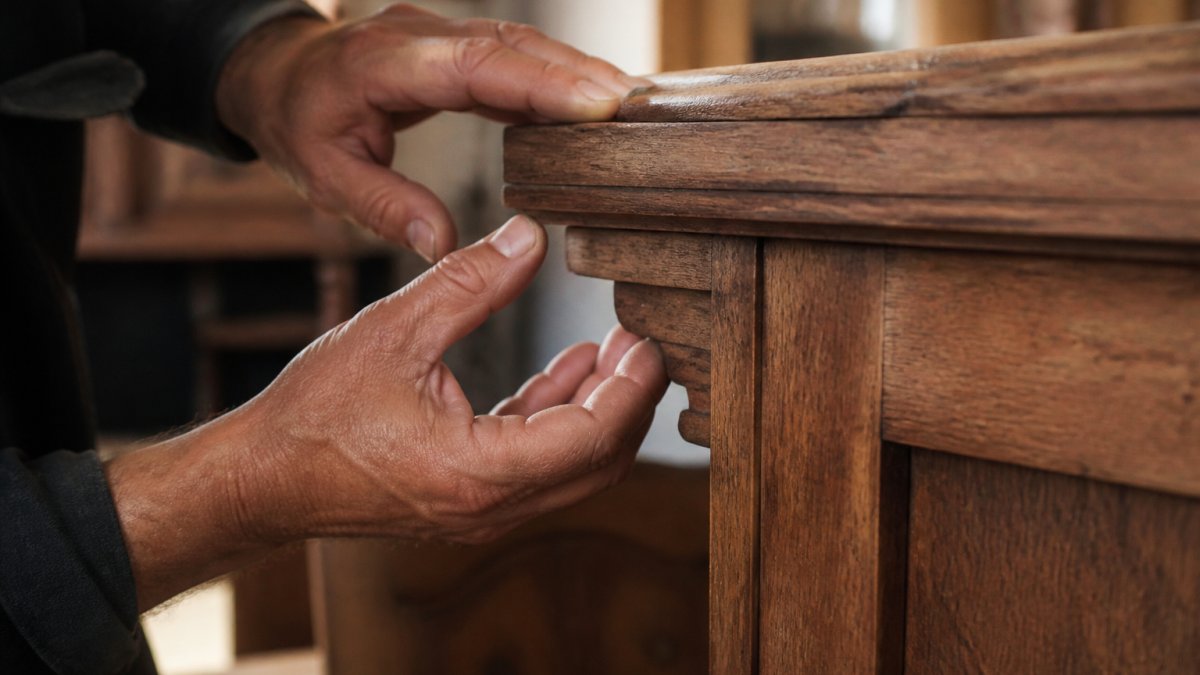
1. Joinery: the single most reliable signal
Pull out a drawer and look at its corners. Dovetail joints, interlocking wedge-shaped pins and tails, are the benchmark; machine-cut dovetails are fine, but stapled or glued butt joints with a plastic corner block are a red flag. On case goods, look for mortise-and-tenon joints at frame corners, often reinforced with a visible wooden dowel pin. On chairs, check that the leg-to-seat connection is a true mortise-and-tenon rather than a screw through a metal bracket, restorers note that chairs failing within a few years almost always relied on screws or brackets.
2. Frame and substrate materials
Ask what the piece is made of, not what it looks like. Solid hardwood, oak, walnut, cherry, maple, ash, is the durable standard. Engineered wood, MDF, and particleboard are fine in hidden panels but should never form a sofa's structural frame or a table's legs. On upholstery, kiln-dried hardwood is the benchmark frame; plywood is acceptable; particleboard is not. Check undersides and backs, artisan makers finish hidden surfaces; mass producers leave them raw or paper-backed.
3. Upholstery construction
Sit down and listen. Eight-way hand-tied springs are the traditional benchmark, still used by higher-end makers; sinuous (zigzag) steel springs are a legitimate mid-tier option; webbing or foam-only construction is budget tier. Ask whether the cushion core is high-resilience foam, a foam-and-down blend, or all down, all-down feels luxurious but needs regular fluffing, while high-resilience foam holds shape with less maintenance. A zippered, removable cushion cover signals a maker who expects the piece to be maintained, not replaced.
4. Finishes and hardware
Run a fingernail across an inconspicuous spot on finished wood. A hard catalyzed lacquer or conversion varnish resists scratching; a soft oil or wax finish marks more easily but can be repaired locally. Neither is "better", but the maker should tell you which they used and how to maintain it. Open and close every drawer and door: dovetailed wooden runners glide and last, metal side-mount slides are fine, stapled plastic runners are a warning. Solid brass hardware patinas and can be polished; plated or painted hardware flakes.
5. Weight, scale, and proportion
Weight is a proxy, not a proof: a solid oak side table feels heavier than an MDF lookalike, but a well-built piece can be deliberately light. Use it to prompt questions, not as a verdict. Proportion is a better tell, artisan pieces have consistent reveal lines (the gap between drawer front and frame), aligned grain across adjacent drawer fronts, and symmetrical hardware; mass-produced pieces show uneven gaps and mismatched grain.
Made-to-Order Furniture: Customization and Authenticity
Made-to-order furniture is the opposite of mass production.
The process begins with a consultation on dimensions, materials, finishes, and design details. Skilled craftspeople then build your piece from scratch, often by hand or with traditional techniques plus modern precision.
Authenticity flourishes in made-to-order work because the maker has invested time and skill specifically in your commission, with no incentive to cut corners. At Che Bella Casa, our made-to-order pieces reflect this commitment.
Made-to-order pieces cost more upfront than mass-produced alternatives, but less over time because they don't need replacing. A handcrafted wooden table built to your specifications serves for decades, potentially generations, while mass-produced furniture typically needs replacement within 5-10 years.
Mediterranean-Style Furniture Collections
Mediterranean aesthetics emphasize warmth, texture, and sun-soaked coastal living, drawing from the design traditions of Spain, Italy, Greece, and southern France.
Authentic Mediterranean pieces favor natural wood with visible grain and weathered finishes, olive wood, walnut, and reclaimed timber, often oiled to enhance rather than mask character.
Mediterranean design balances function and beauty: a dining table is a gathering place for lingering conversations, seating offers comfort without excessive padding or modern sleekness, and storage displays items rather than hiding them.
Mediterranean-style furniture collections suit anyone seeking a cozy retreat aesthetic. The style welcomes worn edges, visible construction, and the patina of age, character marks and weathering aren't flaws but evidence of authenticity and history.
Vintage European Furniture: Authentic Pieces with History
Vintage European furniture carries genuine history, and survival itself proves quality: a piece that has lasted 50, 100, or 200 years was built to endure, louder than any marketing claim about craftsmanship.
Sourcing authentic vintage European furniture requires knowledge, not everything labeled "vintage" is old, and not everything old is well-made.
The advantage of vintage European furniture extends beyond aesthetics: you're buying pieces with proven durability through years of actual use, and acquiring something genuinely one-of-a-kind.
Challenges include authenticity verification, condition assessment, and finding pieces that suit your space; restoration often adds time and cost. But a genuine vintage piece typically pays dividends through beauty, uniqueness, and longevity.
Scandinavian and French Country Aesthetics
Scandinavian design emphasizes minimalism, functionality, and natural materials: clean lines, light wood tones, purposeful simplicity, seamless storage, and palettes of whites, grays, soft blues, and natural wood. The aesthetic feels uncluttered and calm, prioritizing quality over quantity.
French country aesthetics take the opposite visual approach at similar quality standards: ornate details, curved lines, decorative elements, painted finishes in soft pastels or distressed whites, and upholstery in traditional patterns and rich fabrics.
The choice depends on your preference and existing décor: Scandinavian design suits contemporary homes seeking warmth without visual noise, while French country suits those drawn to romantic, detailed environments.
Investment Pieces That Endure
An investment piece is only an investment if you can actually find and buy it. The top search results for this topic are mostly inspiration images and a single forum thread pointing to an antique market, useful for ideas, useless for sourcing. What follows is a vetted starting list of independent makers and retailers, organized by the European design tradition they represent, plus the pricing, lead-time, and shipping realities you need before you commit.
Where to source by tradition
Scandinavian. Danish and Swedish design retailers carrying licensed mid-century reissues and Nordic furniture and lighting showroom network carry licensed reissues and contemporary Scandinavian pieces; expect sofas in the $2,500-$6,000 range and dining chairs from roughly $400-$1,200 each.
French country. French-country and provincial furniture retailer and independent importers specializing in 18th- and 19th-century French provincial case goods are the main channels.
Italian luxury. Italian luxury furniture brands and authorized dealers and Milan-based design brands with U.S. showrooms represent the high end: sofas commonly start around $6,000 and can exceed $20,000, with lead times frequently in the 12-20 week range because pieces are made to order in Italy.
Mediterranean and rustic. Independent importers and artisan cooperatives are the best source for olive wood, reclaimed timber, and wrought-iron pieces. Expect dining tables in the $1,200-$4,500 range for solid reclaimed wood, with custom sizes adding 20-40% to the base price.
Vintage and antique. Auction houses, estate sales, and specialty dealers are the primary channels. Antique and vintage furniture marketplace aggregates dealers and provides provenance documentation on many listings; local auction houses often yield better prices but require you to inspect in person and arrange your own shipping.
Pricing, lead times, and the true cost of ownership
Made-to-order and imported pieces carry lead times that mass-market retailers do not: domestic artisan makers typically quote 6-12 weeks, while European imports commonly run 12-20 weeks plus transit. Shipping is rarely free, white-glove delivery for a large imported piece often adds several hundred dollars, and international shipments can add customs duties and brokerage fees on top of the quoted price.
Warranties vary widely by channel. Established retailers typically offer limited warranties of one to ten years depending on the category, while independent artisans often warranty their workmanship for a stated period and handle repairs directly.
Vintage versus new artisan-made
The trade-off is straightforward. Vintage pieces offer proven durability, one-of-a-kind character, and often the best value per dollar, but condition varies, restoration may be needed, and availability depends on what comes to market. New artisan-made pieces offer customization, a warranty, and predictable lead times, at a higher upfront price.
| Category | Typical Price Range (USD) | Typical Lead Time | Warranty Norm |
|---|---|---|---|
| Scandinavian reissue sofa | $2,500-$6,000 | 8-16 weeks | 5-10 years |
| French provincial antique buffet | $2,000-$8,000 | In stock or 2-6 weeks | As-is or dealer warranty |
| Italian luxury sofa (made to order) | $6,000-$20,000+ | 12-20 weeks | 2-5 years |
| Reclaimed-wood dining table | $1,200-$4,500 | 6-12 weeks | 1-5 years |
| Vintage teak sideboard (1960s) | $1,500-$4,000 | In stock | As-is |
At Che Bella Casa, we focus on pieces designed to become part of your home for years to come. Our curated collections emphasize artisan traditions and quality craftsmanship specifically because these elements determine longevity.
The Black Wooden Accent Table from our collection exemplifies this approach. Handcrafted from high-quality wood with a sleek black finish, it works as a side table, nightstand, or statement piece in living rooms and entryways. At $67.50, it represents genuine value.

Frequently Asked Questions
What materials make European-inspired furniture look more authentic and less mass-produced?
Authentic European-inspired furniture relies on natural materials: solid wood with visible grain, hand-blown glass, wrought iron, and natural textiles. Avoid pieces with veneers, plastic finishes, or uniform printing. Real artisan work shows variations in color and texture, these imperfections prove the piece is handmade, not factory-stamped. Look for materials like reclaimed or aged wood, which develops patina over time, and metal hardware with visible wear that suggests genuine vintage or vintage-inspired construction.
How can you tell if furniture is well made?
Quality furniture has solid joinery (look for mortise-and-tenon joints rather than staples or screws), substantial weight, and stable construction. Check underneath and inside drawers for evidence of hand-assembly. Feel the finish, it should be smooth but not plastic-slick. Examine how doors and drawers move; they should glide without wobbling. High-quality pieces often cost more because they use better materials and labor-intensive techniques. Made-to-order furniture typically reflects superior craftsmanship because it's built to specification rather than mass-produced.
Where can you buy European-style furniture online?
Specialty retailers focused on artisan and Mediterranean-inspired collections offer curated selections that mass-market sites don't. Look for sellers who provide sourcing information, material specifications, and maker credentials. Che Bella Casa, for example, specializes in European-inspired pieces chosen for artisan traditions and quality craftsmanship, including made-to-order options and hand-woven textiles. Verify that retailers disclose where pieces are made and who crafted them, this transparency signals authenticity and helps you avoid mass-produced imports marketed as artisan work.
What style of furniture never goes out of style?
Timeless European aesthetics, Scandinavian design, French country, Italian elegance, and rustic farmhouse, remain relevant because they prioritize function and natural materials over trends. These styles emphasize clean lines, quality craftsmanship, and understated elegance. Mediterranean-style furniture, with its emphasis on organic textures and classic proportions, also transcends fashion cycles. Pieces built on these principles work across decades because they're rooted in enduring design principles rather than seasonal trends. Investing in European-inspired furniture with these aesthetic foundations ensures your collection remains refined and inviting for years.