

Williams Sonoma vs Frontgate: Quality Comparison
Table of Contents
- Material Integrity and Construction: Williams Sonoma vs Frontgate
- Frontgate Furniture Durability Reviews: What Owners Report
- Is Frontgate Furniture Worth the Money? A Price-to-Value Breakdown
- Warranty and Repair Service Comparison
- Resale Value and Longevity: Which Brand Holds Up Over Time
- Target Demographic Alignment: Who Each Retailer Serves Best
- Design Aesthetic and Style Consistency Across Collections
- Where Artisan Alternatives Fit: A Third Path for Discerning Buyers
- Frequently Asked Questions
Last Updated: October 2, 2026
Material Integrity and Construction: Williams Sonoma vs Frontgate
Any honest Williams Sonoma vs Frontgate quality comparison starts with what the pieces are actually made of, because construction is where the two retailers diverge most. Frontgate furniture leans toward heavier frames and weather-ready finishes designed for patios and sunrooms, while Williams Sonoma's furniture line prioritizes refined silhouettes for indoor dining and living rooms.
This guide from Che Bella Casa examines material integrity, durability reports, warranty coverage, and resale value so you can judge which brand fits your home.
Wood, Metal, and Upholstery Standards
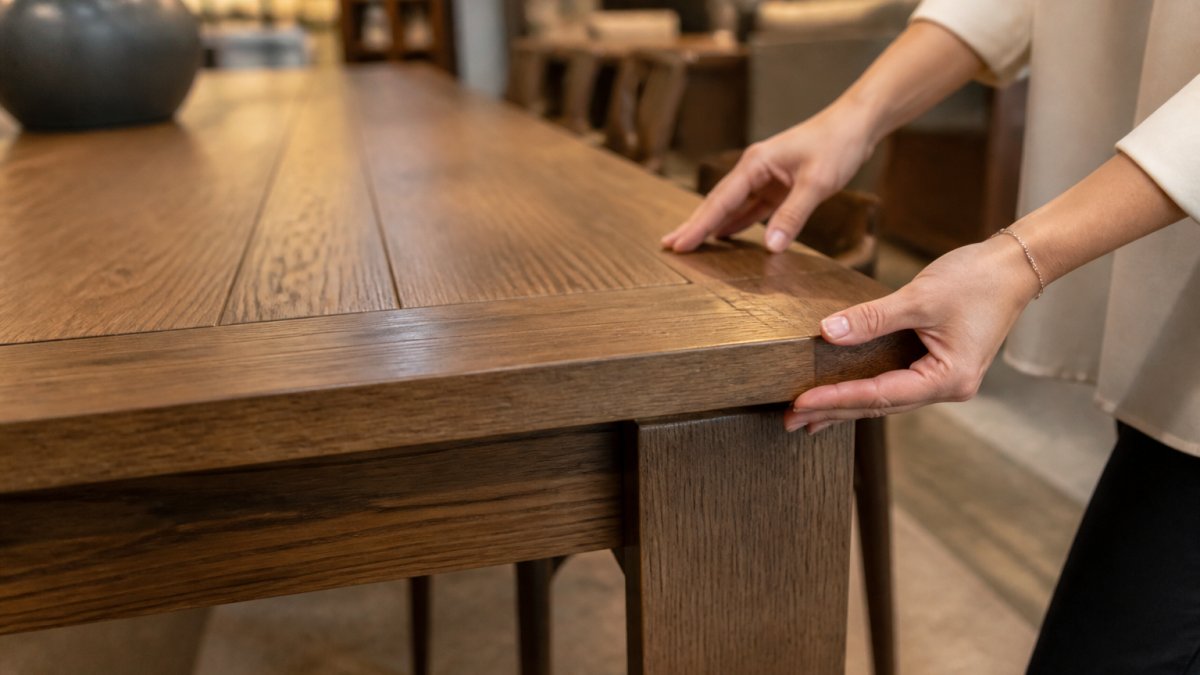
Frontgate typically specifies kiln-dried hardwood frames and powder-coated aluminum for outdoor pieces, which resist moisture and seasonal temperature swings. Williams Sonoma favors solid wood and metal accents with a furniture-grade finish aimed at indoor use.
Finish, Craftsmanship, and Assembly Details
Finish quality is where the two brands trade blows. Frontgate's outdoor finishes are engineered for UV and moisture resistance, a practical advantage if the piece lives on a covered porch. Williams Sonoma's finishes tend to show finer hand-detailing on indoor case goods. Assembly is comparable at both: most large pieces arrive partially assembled, and white-glove delivery is available at checkout for an added fee.
Frontgate Furniture Durability Reviews: What Owners Report
Frontgate furniture durability reviews skew positive on outdoor collections and more mixed on upholstered indoor seating, but the useful signal is not the star rating, it is which component fails first. Across owner reports, the pattern is consistent enough to plan around.
Component-by-Component Failure Patterns
- Frames (outdoor): Powder-coated aluminum and kiln-dried hardwood frames are the last thing to fail. Owners of Frontgate patio sets commonly report frames holding up through multiple seasons of sun, rain, and freeze-thaw cycles with no structural fatigue. This is the component you are actually paying for.
- Cushions (outdoor): Cushions are the first component to show wear in nearly every long-term owner report. Foam compresses and loses loft before the fabric fails, which is why replacement cushion inserts are a common purchase in years two through four.
- Fabric (outdoor): Solution-dyed acrylic covers resist fading and mildew far better than standard upholstery because the pigment is extruded into the fiber rather than dyed onto the surface. The trade-off is hand-feel: performance fabrics read stiffer than natural weaves, and some owners replace cushions for comfort reasons before the fabric shows any fatigue.
- Fabric (indoor upholstery): This is where reports get inconsistent. Some owners note fabric pilling appearing sooner than expected relative to price, particularly on seating that sees daily use. Pilling is a fiber-abrasion issue, not a frame issue, so it does not indicate the piece is poorly built, it indicates the cover specification is the weak link.
- Finish (indoor case goods): Reports on indoor wood finishes are generally favorable, with the caveat that direct sun exposure and standing water are the two conditions that produce premature finish wear regardless of brand.
What This Means for a Buying Decision
A common pattern in owner reviews is that the frame outlives the soft goods by a wide margin. That reframes the durability question: instead of asking "will this last," ask "how many cushion and cover replacements will I buy over the life of the frame, and are those parts still available?" Frontgate stocks replacement cushions and covers for many outdoor collections, which is the practical reason a frame-first purchase can still pencil out over a decade.
The Gap Most Comparisons Skip: Objective Wear Testing
Nearly every ranking article on this topic relies on aggregated owner sentiment, which is useful but not the same as controlled testing. A more reliable framework is to evaluate the same variables a materials lab would: frame joinery type (mortise-and-tenon and corner-blocked joints versus stapled butt joints), finish adhesion under UV exposure, fabric abrasion resistance measured by the Martindale or Wyzenbeek rub test, and foam density measured in pounds per cubic foot.
Is Frontgate Furniture Worth the Money? A Price-to-Value Breakdown
Frontgate furniture is worth the money for buyers who need weather-resistant outdoor pieces and plan to keep them for years. For indoor-only furnishing, the price-to-value ratio is harder to justify when comparable hardwood construction is available elsewhere at lower cost.
| Consideration | Frontgate | Williams Sonoma |
|---|---|---|
| Strength | Outdoor durability, performance fabrics | Indoor refinement, finish detail |
| Weakness | Cushion wear, indoor fabric pilling | Fewer weather-ready options |
| Best for | Patios, sunrooms, covered porches | Dining rooms, living rooms, bedrooms |
| Price posture | Premium, justified by materials | Premium, justified by design |
Warranty and Repair Service Comparison
Warranty coverage is the most under-covered part of any Williams Sonoma vs Frontgate quality comparison, and it is the part that determines what actually happens after year one. Neither brand publishes a blanket lifetime guarantee across all categories. Instead, both use a tiered, component-level warranty structure, and understanding that structure is more useful than memorizing any single term length.
How Tiered Warranties Actually Work
A typical premium furniture warranty is not one promise, it is several, each attached to a different component:
- Frame and structural components: Usually the longest coverage, often measured in years. This reflects that frames rarely fail when built from kiln-dried hardwood or powder-coated aluminum.
- Finish and hardware: Typically shorter than the frame warranty. Finish coverage usually excludes damage from direct sun, standing water, or household cleaners, which is why finish claims are the most commonly denied.
- Cushions, foam, and fabric: Usually the shortest coverage on the page. Foam compression and fabric pilling are frequently classified as normal wear rather than defects, so they fall outside coverage even when they appear early.
- Mechanical components (recliners, glides, swivels): Often covered separately from the frame, with their own term.
This is why a single product page can show a multi-year frame warranty and a one-year cushion warranty side by side. The terms are not contradictory, they apply to different parts of the same piece.
What Repair and Parts Support Looks Like in Practice
The more decision-relevant question is not "how long is the warranty" but "can I get this fixed, and by whom." Both retailers offer replacement parts and repair services, but the mechanics differ in ways that matter:
Twisted Urban Flatware, 5-Pc. Place Setting →
- Stocked items generally move through replacement-part channels faster, because the part exists in inventory.
- Made-to-order and special-order items can extend turnaround significantly, since the replacement may need to be produced on the same schedule as the original.
- White-glove delivery often includes in-home assembly and placement, and some service issues are resolved through that channel rather than a separate repair visit.
- Upholstered pieces are the hardest to repair in place. Reupholstery is usually a local, third-party service rather than a manufacturer offering, which means the practical repair path for a sofa runs through your local upholsterer, not the retailer.
The Questions That Reveal the Real Policy
Because neither brand publishes identical terms across every category, the fastest way to compare is to ask the same four questions about any specific item:
- What is the warranty term for the frame, and what is it for the cushion and cover?
- Are replacement cushion cores and covers sold separately after the warranty ends?
- Is the item stocked or made to order, and how does that affect parts turnaround?
- Does white-glove delivery include any post-delivery service visit, or is that a separate request?
A retailer that answers all four clearly is offering a stronger post-purchase experience than one with a longer headline term and no parts path. That distinction, serviceability, not just coverage length, is the real quality signal, and it is the piece almost no competing comparison covers.
Resale Value and Longevity: Which Brand Holds Up Over Time
Resale value favors whichever brand has stronger name recognition in the buyer's local market, and both hold moderate value on the secondary market. Solid wood and metal frames retain more value than upholstered pieces, since fabric condition drives most of the depreciation. Longevity follows materials: a kiln-dried hardwood frame outlasts a particleboard one by a wide margin regardless of the badge on it.
Target Demographic Alignment: Who Each Retailer Serves Best
Williams Sonoma serves design-led buyers furnishing indoor rooms who want a recognizable name and coordinated collections. Frontgate serves homeowners with outdoor living spaces, larger footprints, and a preference for durability over trend. If your project spans both indoors and out, most buyers end up mixing retailers rather than committing to one.
Design Aesthetic and Style Consistency Across Collections
Style consistency is Williams Sonoma's clearest edge. Its collections coordinate across dining, kitchen, and living categories, which makes a whole-room refresh simpler. Frontgate's aesthetic leans traditional and resort-inspired, and its outdoor lines coordinate well with each other but less so with indoor collections from other retailers.
Where Artisan Alternatives Fit: A Third Path for Discerning Buyers
A third path exists for buyers who want pieces that are not mass-produced at all. At Che Bella Casa, our curated collection focuses on artisan traditions and quality craftsmanship, with many furniture pieces made to order and finishes inspired by Mediterranean coastlines and European countryside estates. For table settings, our Twisted Urban Flatware, 5-Pc. Place Setting is handmade from 18/8 stainless steel with a twisted ribbon design, and the Ridge Flatware, 5-Pc. Place Setting brings hammered texture in antique copper, black, or nascent steel. Both are dishwasher safe and arrive wrapped in soft cotton cloth.


Frequently Asked Questions
Is Williams Sonoma considered high-end furniture?
Williams Sonoma carries a range of furniture, from mid-priced pieces to higher-end collections with solid wood frames and premium upholstery. The brand sits in the premium segment, though its quality varies by collection. Some lines use engineered wood and veneers, while others feature hardwood construction and FSC-certified sourcing. Buyers looking for true investment pieces often compare Williams Sonoma against specialty retailers that focus on material integrity and artisan craftsmanship rather than broad catalog variety.
How does Frontgate furniture quality compare to Williams Sonoma?
Frontgate tends to emphasize outdoor and performance-focused furniture, with many pieces built around weather-resistant materials and performance fabrics. Williams Sonoma offers a broader mix of indoor and outdoor collections, leaning toward a classic American aesthetic. In durability testing and owner reviews, Frontgate often scores well for outdoor exposure, while Williams Sonoma gets praise for indoor upholstery and finish consistency. The better choice depends on whether you prioritize outdoor resilience or indoor style range.
Is Frontgate furniture worth the money?
Frontgate furniture sits in the premium tier, and whether it is worth the price depends on your use case. For outdoor pieces exposed to sun, rain, and temperature swings, the brand's performance fabrics and rust-resistant frames often justify the cost. For indoor furniture, compare the price-to-value ratio against artisan alternatives. Frontgate's warranty coverage and post-purchase support add value, but buyers seeking one-of-a-kind pieces may find better alignment with specialty retailers.
Which brand offers better customer service and return policies for large furniture items?
Both Williams Sonoma and Frontgate offer return windows and delivery coordination for large furniture, but policies differ in detail. Williams Sonoma generally provides a 30-day return window with restocking fees on some furniture items. Frontgate's policy varies by product and may include white-glove delivery. Before ordering, confirm who pays return shipping and whether assembly and installation are included. Specialty retailers often provide more personalized post-purchase support for made-to-order pieces.
Choosing between two premium retailers often leaves buyers wondering whether they paid for quality or just for a label. At Che Bella Casa, we offer a different answer: curated luxury home décor with artisan traditions, made-to-order furniture, and pieces chosen for craftsmanship rather than volume. Subscribe to our emails and be first to see new collections built to be treasured for years.