

Verve Culture vs Williams Sonoma: Juicer Review
Table of Contents
- Verve Culture vs Williams Sonoma Citrus Juicer: What Actually Matters
- Verve Culture Citrus Juicer Review: The Artisan Squeeze
- Williams Sonoma Citrus Juicer Review: The Reliable Standby
- Manual Citrus Juicer Comparison: Squeeze, Yield, and Feel
- How to Clean a Manual Citrus Juicer (Without Damaging It)
- Where Each Juicer Wins: A Practical Buying Guide
- Frequently Asked Questions
Last Updated: October 8, 2026
Verve Culture vs Williams Sonoma Citrus Juicer: What Actually Matters
Choosing between a Verve Culture and a Williams Sonoma citrus juicer comes down to what you value more: hand-finished character or predictable, mass-produced consistency. This Verve Culture vs Williams Sonoma review breaks down build quality, juicing performance, and cleanup so you can pick the right manual press for your kitchen. At Che Bella Casa, we spend our days sourcing artisan-made home pieces, so we pay close attention to how objects are constructed and how they age.
The manual juicer category splits into two camps. One is the small-batch, artisan-finished press, where color and surface vary slightly from piece to piece. The other is the factory-standard tool built to identical specs at scale. Neither approach is wrong. They just serve different buyers.
Below, we'll show you exactly how each juicer behaves on lemons, limes, and oranges, plus the cleaning mistakes that ruin the finish on both.
Verve Culture Citrus Juicer Review: The Artisan Squeeze
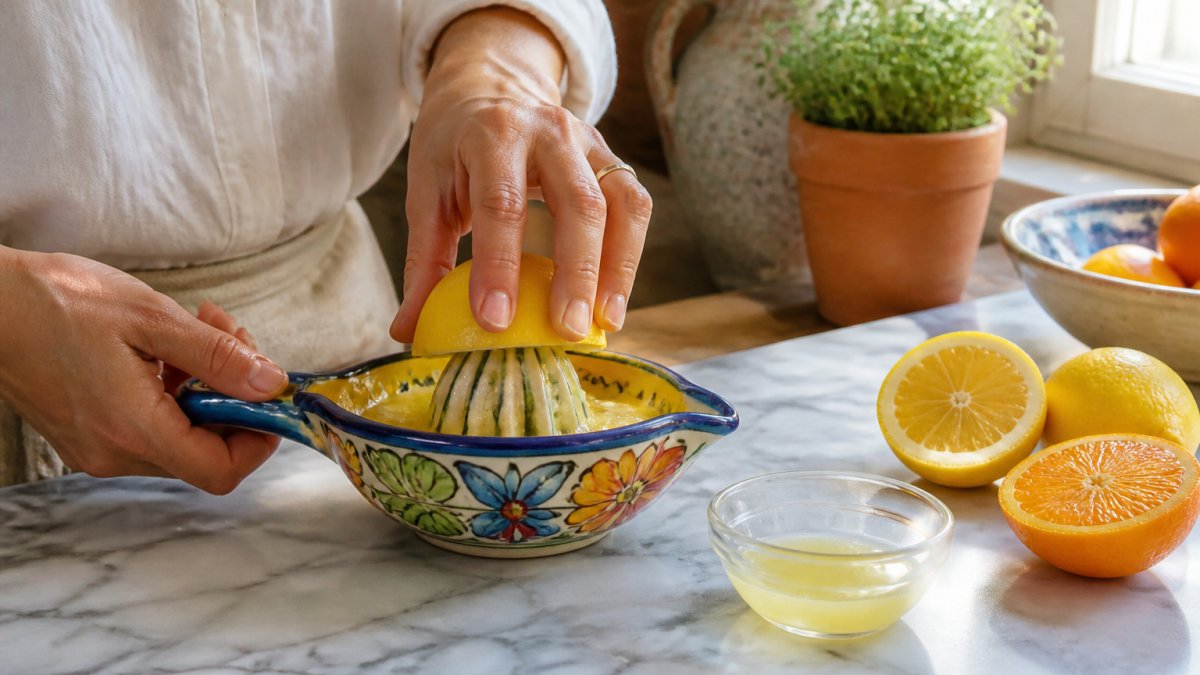
The Verve Culture citrus juicer is a hand-painted manual press, and its appeal is visual as much as functional. Each unit carries small variations in glaze and color that a mass-produced juicer won't have.
Build, Materials, and What You're Paying For
The premium here is the finish, not the mechanism. A hand-painted juicer takes more labor per unit, and that labor is what you're buying. What most guides miss is that artisan finishing means the piece you receive won't perfectly match the website photo. That's the point, not a defect.
How It Performs on Lemons, Limes, and Oranges
Lemon and lime halves press cleanly, and the reamer handles the smaller fruit well. Oranges take more hand strength because the fruit is larger and heavier. If you juice a lot of oranges, expect a workout.
Williams Sonoma Citrus Juicer Review: The Reliable Standby
The Williams Sonoma citrus juicer is the predictable option: consistent materials, consistent color, and a design that has changed little over the years. What you give up in character, you gain in uniformity.
Build, Materials, and What You're Paying For
You're paying for repeatability. Every unit looks and feels the same, which matters if you're buying a gift or matching an existing kitchen. The trade-off is that a factory-finished surface tends to show scratches more visibly than a hand-glazed one.
How It Performs on Lemons, Limes, and Oranges
Performance is solid across all three fruits. The press is stable, the handle travel is smooth, and yield is consistent batch to batch. It's the safer pick for a household that juices daily and wants zero surprises.
Manual Citrus Juicer Comparison: Squeeze, Yield, and Feel
Here's the short version of how the two stack up side by side.
| Feature | Verve Culture | Williams Sonoma |
|---|---|---|
| Finish | Hand-painted, varies per piece | Factory-standard, uniform |
| Best for | Lemons and limes | Lemons, limes, oranges |
| Feel | Artisan, slightly irregular | Smooth, predictable |
| Cleaning | Hand wash only | Hand wash only |
| Character | High | Low |
| Consistency | Low | High |
A manual citrus juicer comparison really comes down to one question: do you want a tool that looks identical to every other one, or a piece that looks like yours alone?
How to Clean a Manual Citrus Juicer (Without Damaging It)
Learning how to clean a manual citrus juicer properly is the difference between a piece that lasts years and one that dulls in months. Rinse immediately after use with warm water and a soft cloth. Citrus acid left sitting on any finish, hand-painted or factory-applied, will eventually dull it.
- Never put a manual press in the dishwasher, even if it looks sturdy
- Avoid abrasive sponges and scouring powders
- Dry fully before storing to prevent water spots
- Store with the reamer up so the base drains
Where Each Juicer Wins: A Practical Buying Guide
Pick the Verve Culture if you want a piece with visible character and mostly juice lemons and limes. Pick the Williams Sonoma if you want identical consistency, juice oranges often, or you're buying a gift and can't risk color variation.
If you're building a kitchen with a Mediterranean or European countryside feel, the artisan option fits that aesthetic far better. It's the same reason we curate hand-woven textiles and sculptural ceramics at Che Bella Casa: small variations are what make a room feel collected rather than catalog-ordered.
For buyers weighing a Verve Culture vs Williams Sonoma review, the honest answer is that both work. The decision is about whether you want a tool or a piece.
Frequently Asked Questions
Is the Verve Culture citrus juicer worth it?
It depends on what you value. Verve Culture juicers often feature artisan-made designs and unique finishes, which can justify the higher price for buyers who want a countertop piece that doubles as decor. If you mainly need efficient juice extraction and easy cleanup, a simpler manual press may serve you just as well. Consider how often you juice and whether the aesthetic fits your kitchen before deciding.
How does the Verve Culture juicer compare with Williams Sonoma citrus juicers?
Verve Culture tends to focus on handcrafted, small-batch designs with a strong visual identity. Williams Sonoma offers a broader range of manual juicers, from basic presses to more substantial models, often with a more traditional look. In a manual citrus juicer comparison, Verve Culture usually wins on unique style, while Williams Sonoma may offer more size and price options. Both can extract juice effectively; the choice comes down to design preference and how much you want to invest.
Which manual citrus juicer extracts the most juice?
Extraction depends more on technique and fruit quality than on brand. A heavy, well-balanced press that lets you apply steady force typically gets more juice than a lightweight handheld squeezer. For lemons and limes, a lever-style or sturdy handheld press works well; for oranges and grapefruits, a larger reamer or press designed for bigger fruit is better. Look for a juicer with a comfortable handle and a deep bowl to catch every drop.
How do I clean a manual citrus juicer without damaging it?
Rinse immediately after use to prevent pulp from drying. Most manual juicers are hand-wash only; check the manufacturer's instructions. Use warm water, mild dish soap, and a soft brush or sponge to remove pulp and oils. Avoid abrasive scrubbers and never put metal parts in the dishwasher unless explicitly stated. For wooden handles or parts, wipe with a damp cloth and dry thoroughly. A monthly deep clean with a paste of baking soda and water can remove stubborn residue.
The real challenge isn't picking a juicer. It's building a kitchen where every piece feels intentional rather than interchangeable. That's what we do at Che Bella Casa, with artisan-made décor, hand-finished ceramics, and made-to-order furniture chosen for craftsmanship that holds up for years. Subscribe to our emails and see how a single well-chosen piece changes a room.