

Styling Mediterranean Decor in Modern Homes: 2026 Guide
Table of Contents
- Modern Mediterranean Style: A Timeless Aesthetic for Today
- Defining the Look: Clean Lines Meet Old-World Charm
- The Modern Mediterranean Color Palette: Earth Tones and Warm Neutrals
- Key Mediterranean Interior Design Elements for a Modern Home
- How to Style Mediterranean Decor: A Step-by-Step Approach
- Budget-Friendly DIY Mediterranean Styling Ideas
- Small-Space Mediterranean Application: Making It Work in Apartments
- Sustainable and Eco-Friendly Material Sourcing for Mediterranean Decor
- Where Craft Meets Modern Living
- Frequently Asked Questions
Last Updated: September 20, 2026
Modern Mediterranean Style: A Timeless Aesthetic for Today
A design movement rooted in centuries of coastal living is finding new life in contemporary interiors. Styling Mediterranean decor in modern homes works best when you treat it as a study in restraint: clean architectural lines paired with warm, tactile materials that have aged gracefully for generations.
Defining the Look: Clean Lines Meet Old-World Charm
Modern Mediterranean style is a design approach that combines contemporary minimalism with traditional Mediterranean materials, colors, and craftsmanship. It favors white or limewash walls, natural stone, and handcrafted pieces over mass-produced furniture.
The Modern Mediterranean Color Palette: Earth Tones and Warm Neutrals
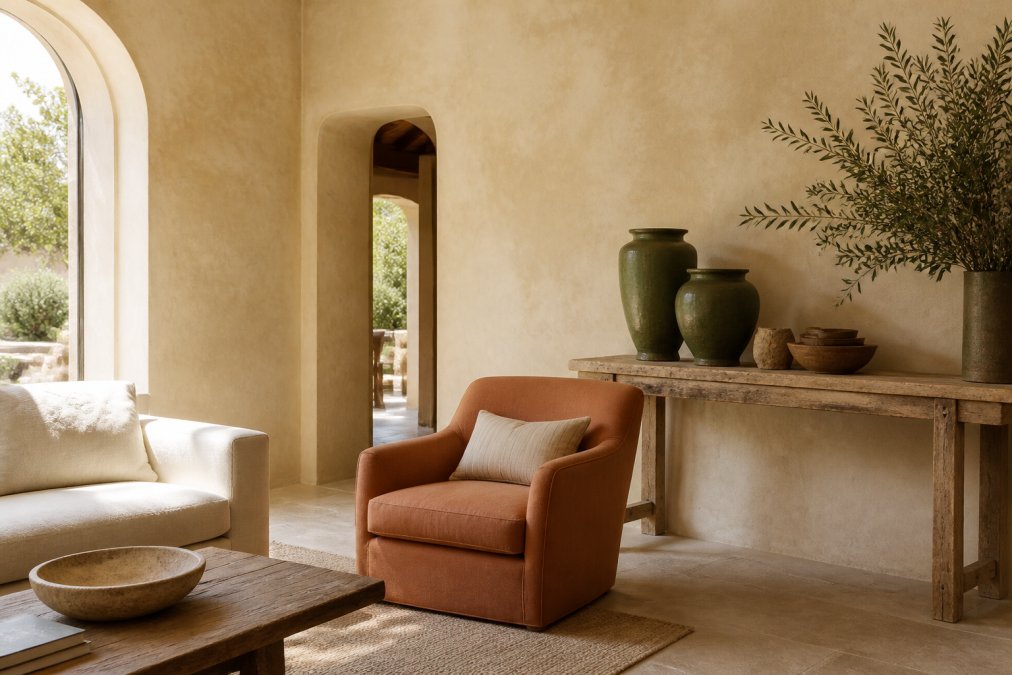
The modern Mediterranean color palette centers on warm neutrals: chalky white, sand, clay, and soft beige. These form the base. Terracotta, olive, and muted ochre enter as accents, never as dominant tones.
Terracotta, Olive, and Sun-Kissed Hues
Terracotta brings warmth that cooler neutrals cannot. Olive green grounds a room and reads as sophisticated rather than rustic when used on upholstery or cabinetry. Sun-kissed hues, the soft yellows and faded pinks of a coastal afternoon, work best on textiles and small accent pieces.
Key Mediterranean Interior Design Elements for a Modern Home
The core Mediterranean interior design elements are arched doorways, exposed beams, natural textures, and handcrafted objects. You do not need all of them. Two or three, used consistently, carry the whole room.
Arches, Exposed Beams, and Natural Textures
Arches soften a space. If you cannot add a structural arch, a arched mirror or a curved headboard delivers the same visual rhythm at a fraction of the cost. Exposed beams add architectural interest overhead and draw the eye upward, which helps lower ceilings feel taller.
Handcrafted Ceramics, Wrought Iron, and Linen Upholstery
Handcrafted ceramics, wrought iron hardware, and linen upholstery are the details that make the style feel authentic rather than catalog-ordered. A single sculptural vase or a hand-thrown bowl reads as intentional.
| Element | Where to Use It | Why It Works |
|---|---|---|
| Limewash walls | Living rooms, bedrooms | Adds depth and a soft, chalky finish |
| Arched openings | Hallways, entryways | Softens hard architectural lines |
| Exposed beams | Ceilings, kitchen | Adds warmth and vertical interest |
| Linen upholstery | Sofas, dining chairs | Breathes in warm climates, ages well |
| Wrought iron | Lighting, hardware | Provides textural contrast to soft textiles |
How to Style Mediterranean Decor: A Step-by-Step Approach
Learning how to style Mediterranean decor comes down to sequence. Build the base first, then layer texture, then add character. Skipping ahead to accent pieces is the fastest route to a cluttered result.
1. Start with a Neutral Base and Layer in Texture
Begin with warm neutral walls and a simple floor. Add texture through a woven rug, a linen slipcover, and a raw wood surface. Each layer should introduce a new material, not a new color.
2. Mix Rustic and Refined Pieces for Balance
Pair one rough element with one polished element in every zone. A rustic wooden table under a sleek pendant light. A refined sofa beside a weathered console. This balance is what keeps the look contemporary.
3. Add Greenery and Natural Light
Olive branches in a ceramic pitcher, a potted fig near a window, sheer curtains that filter rather than block. Greenery and daylight are not optional here; they are what make the palette feel alive.
Budget-Friendly DIY Mediterranean Styling Ideas
Most guides assume you are gutting a kitchen or importing limestone from overseas. You are not. The look is built from a small number of high-visibility surfaces, and those are the cheapest things to change. This section is the playbook the high-end guides skip.
The 80/20 of Where Your Money Goes
Your eye lands on three zones first: the wall behind the main seating area, the light fixture overhead, and the hardware on cabinets and doors. Spend your budget there. Leave floors, countertops, and built-ins alone unless you are certain you will stay put for years.
A practical order of operations:
- Walls first. A single limewash-effect accent wall changes the entire mood of a room for the cost of a gallon of paint and a weekend. Mineral and lime-based paints run higher than standard latex, but a limewash-effect finish in a warm chalky white or sand tone delivers most of the visual payoff at a fraction of true limewash.
- Lighting second. A woven rattan, ceramic, or aged-brass pendant replaces a builder-grade dome fixture and instantly reads as intentional. This is the single highest-impact swap in most rooms.
- Hardware third. Wrought iron or matte-black pulls on kitchen cabinets and interior doors cost little per piece and take an afternoon with a screwdriver.
- Textiles fourth. A linen or cotton slipcover, a flatweave or vintage runner, and one or two linen throw pillows reset the room's texture without touching a single fixed element.
- Ceramics last. Group three hand-thrown or artisan-made vessels of varying heights on a console or shelf. Buy one good piece rather than five cheap ones.
Renter-Safe Moves
If you cannot paint or drill, you still have options:
- Peel-and-stick limewash-look wallpaper on one wall, removable at move-out.
- Plug-in wall sconces with a cord cover to mimic the wrought-iron sconce look without wiring.
- A leaning arched mirror instead of a mounted one, no holes, big visual payoff.
- Removable cabinet hardware if your landlord permits, or adhesive hooks for lightweight decor.
- Layered rugs over existing carpet to introduce texture and hide what you cannot change.
What Not to Cheap Out On
Two categories punish false economy: lighting and ceramics. A flimsy pendant with a plastic shade reads as plastic from across the room, and mass-produced ceramics lose the irregularity that makes the style feel handmade. Save longer and buy one real piece in each category rather than filling the room with substitutes.
A Realistic Weekend Sequence
- Saturday morning: Paint or apply the accent wall. Let it dry.
- Saturday afternoon: Swap the light fixture and cabinet hardware.
- Sunday morning: Layer the rug and add the slipcover or throw.
- Sunday afternoon: Style the ceramics and greenery, then step back and edit.
The principle stays the same: change what the eye lands on first, and leave the expensive fixed elements alone until you are certain.
Small-Space Mediterranean Application: Making It Work in Apartments
Most Mediterranean styling content is written for vaulted ceilings and open floor plans. Apartments and small rooms need a different approach: subtraction, not addition. The style rewards restraint, which is exactly why it translates well to compact spaces, if you resist the urge to include every element.
Pick Three, Not Ten
A studio or one-bedroom cannot absorb arches, beams, stone floors, limewash walls, wrought iron, ceramics, and linen all at once. Choose three signature moves and execute them consistently. A common winning combination for small spaces:
- One textured wall (limewash-effect or a warm plaster finish)
- One arched element (mirror, headboard, or shelf niche)
- One dominant natural material (linen, raw wood, or unglazed ceramic)
Scale Rules That Actually Matter
- Go bigger, not smaller, on statement pieces. A full-height arched mirror in a narrow entryway makes the space feel generous. Five small decorative objects make it feel cluttered.
- Keep furniture legs visible. Raised legs let the floor plane read continuously, which visually expands the room. Heavy skirted sofas and solid-base cabinetry chop it up.
- Use vertical space. A tall ceramic vase, a floor-to-near-ceiling linen curtain, or a stacked column of baskets draws the eye upward and adds height.
- Limit textures to two dominant ones per room. In a small space, three or more competing textures read as noise rather than depth.
Room-by-Room Notes
Studio or open plan. Define zones with rugs rather than walls. One textured wall anchors the seating area; keep the sleeping zone in the same palette but quieter.
The Rental Constraint
If you cannot paint, a large arched mirror or a leaning panel in a limewash finish delivers the textured-wall effect without touching the wall. Removable wallpaper in a plaster or limewash pattern is the next best option. Cordless or plug-in sconces replace hardwired wrought-iron fixtures.
What to Skip
Exposed beams, stone flooring, and heavy drapery all fight a small floor plan. If you love the look of beams, a painted ceiling in the same warm neutral as the walls gives a similar softening effect without the visual weight. If you want stone, a single stone-topped side table or a stone tray delivers the texture without the commitment.
Sustainable and Eco-Friendly Material Sourcing for Mediterranean Decor
Sustainable sourcing is where this style has a natural advantage. Limewash, clay finishes, and stone are mineral-based and long-lasting, and artisan-made pieces are typically produced in small batches rather than at industrial scale.
Ask three questions before you buy:
- Is the material natural and minimally processed?
- Was the piece made by hand, and by whom?
- Will it still look right in ten years?
Where Craft Meets Modern Living
The challenge with this style is not knowing what it looks like. It is finding pieces that carry the warmth and authenticity the aesthetic demands, without settling for mass-produced imitations that lose their finish within a season.
Frequently Asked Questions
What defines modern Mediterranean interior design?
Modern Mediterranean interior design blends the old-world charm of the Mediterranean with contemporary clean lines. It features a palette of earth tones and warm neutrals, natural materials like stone and linen, and architectural elements such as arches and exposed beams. The goal is a light-filled, breezy atmosphere that feels both timeless and current, avoiding heavy ornamentation in favor of a minimalist aesthetic with handcrafted touches.
How do you mix Mediterranean decor with modern furniture?
To mix Mediterranean decor with modern furniture, start with a neutral base and add rustic, handcrafted pieces as accents. For example, pair a sleek modern sofa with a vintage terracotta side table or wrought iron lighting. Use natural textures like linen upholstery and raw wood to bridge the styles. The key is balance: let modern pieces provide clean lines while Mediterranean elements add warmth and character.
What are the key color palettes for a modern Mediterranean home?
The key color palettes for a modern Mediterranean home draw from the landscape: sun-kissed earth tones, terracotta, olive green, warm beige, and soft white. These are often punctuated with deep blues or greens inspired by the sea. The goal is a harmonious, organic feel that reflects natural light. Use these colors on walls, textiles, and accessories to create a cohesive, inviting space.
How can I make my home look Mediterranean without a renovation?
You can achieve a Mediterranean look without renovation by focusing on decor and textiles. Swap heavy curtains for lightweight linen, add handcrafted ceramics and terracotta pots, and incorporate natural textures like jute rugs and woven baskets. Use warm, earthy colors in throw pillows and artwork. Layering these elements creates a breezy, Mediterranean atmosphere without structural changes.