

How to Source Authentic Artisan Ceramic Decor
Last Updated: October 31, 2026
Quick Summary
Source authentic artisan ceramic decor through studio-direct purchases, curated retailers, or juried craft marketplaces, and verify each piece by checking weight, glaze variation, base finish, and maker disclosure. Ask who made it, where, with what clay body, and how it was fired. A seller who cannot answer all four questions is not selling verified artisan work.
- Hand-thrown stoneware feels denser and heavier than molded porcelain of the same size.
- Perfectly even glaze color across a large piece is a red flag for factory production.
- Studio direct purchases offer the highest proof of origin, with pieces priced $40-$400+.
- Two failed checklist checks means walk away; one failed check means ask a follow-up question.
- Ethical sourcing means tracing a piece to a named studio and a fair production model.
Table of Contents
- Start With the Difference Between Mass-Produced and Handmade Ceramics
- How to Identify Handmade Ceramics Before You Buy
- Where to Source Artisan Ceramic Decor
- Questions to Ask Ceramic Artists and Sellers
- Your Artisan Sourcing Checklist
- Verify Origin and Source Ethically
- Build Your Collection With Che Bella Casa
- Frequently Asked Questions
Start With the Difference Between Mass-Produced and Handmade Ceramics
The pottery ceramics market reached an estimated $12.3 billion in 2025 and is projected to hit $17.3 billion by 2033, according to the Pottery Ceramics Market Size and Share Report 2026-2033. That growth makes authentic artisan ceramic decor sourcing harder than ever, because factory output now mimics handwork closely enough to fool most buyers.
Here is the core difference. Mass-produced ceramics are cast in molds, sprayed with uniform glaze, and fired in identical batches. Handmade ceramics are thrown, hand-built, or slip-cast in small runs, then glazed and finished by hand.
That handwork leaves marks. Slight asymmetries. Uneven glaze pooling. Brush strokes near the base.
Those marks are a useful first check when you evaluate any ceramic piece.
EXTERNAL_LINK: Artisan vs Mass-Produced Home Decor: Quality & Value
How to Identify Handmade Ceramics Before You Buy
You can identify handmade ceramics by checking weight, glaze variation, base finish, and maker disclosure. A piece that fails two or more of those checks is likely factory-made.
Start with weight. Hand-thrown stoneware feels denser and heavier than molded porcelain of the same size.
Then look at the glaze. Real hand-glazing leaves thin spots, drips, and color shifts. Perfectly even color across a large piece is a red flag.
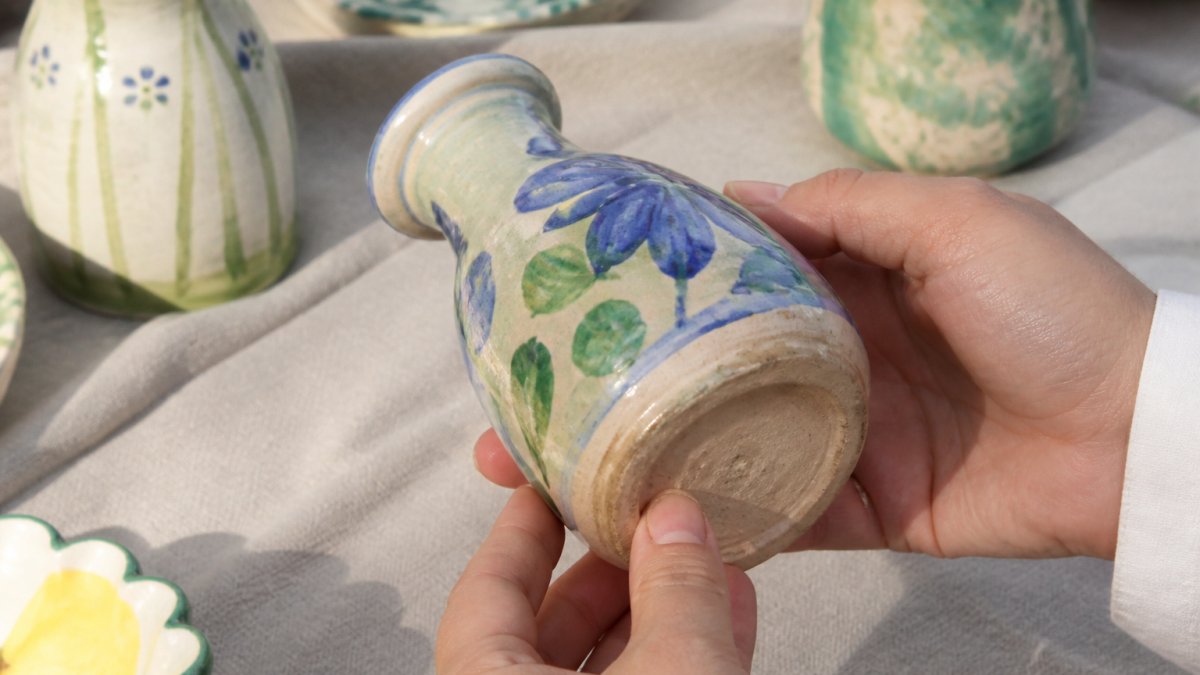
The base tells you the most. Look for a foot ring, a maker's mark, or unglazed clay. Bare earthenware at the foot ring means a real ceramic body, not resin.
Watch out: sellers sometimes list factory goods as handmade. A buyer discussion on resold "handmade" pottery flags this exact problem, so treat the label as a claim to verify, not proof.
EXTERNAL_LINK: How to Verify Artisan Decor Authenticity
Where to Source Artisan Ceramic Decor
The best sourcing channels are studio-direct purchases, curated retailers, and juried craft marketplaces. Each trades convenience for a different level of proof about who made the piece.
Marketplaces, Studios, and Curated Retailers
Here is how the three main channels compare:
| Channel | Proof of Origin | Price Range | Best For |
|---|---|---|---|
| Studio direct | Highest, you meet the maker | $40-$400+ | Collectors who want a named artist |
| Curated retailer | High, vetted roster | $30-$300 | Buyers who want a cohesive look |
| Open marketplace | Low to moderate | $10-$150 | Budget buyers willing to verify |
Studio visits and open studio tours give you the strongest proof. You see the kiln, the wheel, and the work in progress.
Curated retailers sit in the middle. Ask who the maker is, even when a retailer has vetted its sources.
Open marketplaces are the riskiest. Volume sellers dominate search results, and handmade labels are self-reported. You can browse handcrafted European ceramic vases to see specific artisan pieces available to buy.
EXTERNAL_LINK: Best Places to Buy Artisan Ceramics: 2026 Guide
Yellow Stripe Bud Vase | Handpainted Ceramic →
Questions to Ask Ceramic Artists and Sellers
Ask four questions before you buy: who made it, where, with what clay body, and how it was fired. A seller who cannot answer all four is not selling verified artisan work.
Here is what to ask, in plain terms:
- Who made this piece? Get a name, not a country.
- What clay body did you use? Stoneware, porcelain, or earthenware.
- How was it fired? Electric kiln, gas, wood, or raku.
- Is the glaze food-safe and lead-free? Ask for the label.
- Can you show me the batch or studio photos?
The firing question separates hobbyists from production studios. Wood-firing and gas reduction leave distinctive surface effects that are hard to fake.
If a seller answers "our artisans" without a name or region, treat that as a marketing line.
Your Artisan Sourcing Checklist
Use this checklist before you pay for any ceramic piece:
- Weight feels dense for its size
- Glaze shows natural variation, not uniform spray
- Base has a foot ring, maker's mark, or bare clay
- Maker's name and studio are disclosed
- Firing method is stated
- Glaze is labeled lead-free or food-safe
- Photos show the actual piece, not a stock image
- Return policy covers damage in transit
Two failed checks means walk away. One failed check means ask a follow-up question.
Keep this list on your phone. It takes about 90 seconds to run through at a market or a shop.
Verify Origin and Source Ethically
Ethical sourcing means you can trace a piece to a named studio and a fair production model. Design research shows this matters to buyers, not just makers.
A study by E. Lacey in The International Journal of Design found that emotionally durable ceramics gain value through visible evidence of the maker's hand. That durability argument only holds if the maker is real and paid fairly.
Ask three things to verify origin:
- Named studio or artist. A region alone is not traceability.
- Production volume. Small batches support handwork claims.
- Fair pay disclosure. Many studios now publish this.
Cultural craft traditions deserve the same scrutiny. Research on Chaozhou inlaid porcelain by Yuancheng Ma shows how regional techniques carry identity, and buyers who understand the technique can spot imitation quickly.
Build Your Collection With Che Bella Casa
Start with one piece, not a room. A single well-chosen ceramic object tells you more about a maker than a catalog page ever will.
Our collection leans on exactly that idea. The Yellow Stripe Bud Vase is hand-painted and crafted in ceramic, and the slight variation between pieces is part of its hand-painted character. The Hand-Woven Rattan & Clay Vase combines clay with rattan weaving for a warm, rustic look.
Pieces are chosen for artisan tradition and quality craftsmanship. That is what turns a shelf into something you keep for years.
Frequently Asked Questions
How can you tell if ceramic decor is genuinely handmade?
Look for variation the machine cannot repeat: slightly uneven rims, visible brush strokes, thumb marks near the foot ring, and glaze that pools differently on each piece. A maker who shares process photos, names the studio, and explains the firing method is a stronger signal than a label. Be cautious with listings that use the word handmade but show identical pieces photographed in bulk. Ask directly who made the piece and where, and treat a vague answer as a warning.
What should you ask an artisan before buying artisan ceramic decor?
Ask four things: who made the piece and in which studio, what clay and glaze were used, how it was fired, and how to care for it. Add a question about lead-free glazes if the piece will hold food or drink. A credible maker answers in specifics, not marketing language. You can also ask whether the piece is one of a batch or a one-off, and whether replacements are possible if it arrives damaged.
Why do handmade ceramic pieces vary in shape and color?
Each piece is shaped, painted, and fired individually, so clay shrinkage, glaze thickness, and kiln position all shift the final result. That is why two vases from the same batch can differ slightly in tone and profile. The variation is the proof of hand work, not a defect. Expect small differences in stripe width, glaze pooling, and silhouette, and check whether the seller states this clearly before you order.
How should you care for handcrafted ceramic decor?
Check the care note for each piece before you buy, because finishes differ. Some hand-painted ceramics are dishwasher and microwave safe, while others need a damp soft cloth and no abrasive scrubbing to protect the paint. When in doubt, hand wash and dry immediately.
Sourcing authentic pieces takes patience, and most buyers quit before they get good at it. We built our collection to remove that guesswork, with hand-painted ceramics and hand-woven accents chosen piece by piece. Browse the Che Bella Casa ceramics collection and subscribe to our emails for first access to new artisan arrivals.
