

How to Mix European Rustic Decor: A Step-by-Step Guide
Table of Contents
- Understanding European Rustic Style and Its Core Elements
- How to Mix Rustic and Modern Decor Without Clashing
- European Rustic Interior Design Ideas: Selecting Your Foundation
- How to Mix Vintage and Contemporary Furniture in One Room
- Room-by-Room Application: Bringing It All Together
- Common Mistakes to Avoid When Mixing Styles
- Sourcing Authentic Pieces and Budget-Conscious Prioritization
- Frequently Asked Questions
Last Updated: October 10, 2026
Understanding European Rustic Style and Its Core Elements
European rustic decor draws inspiration from countryside estates and Mediterranean coastlines, where time-worn materials and natural textures tell stories of lived-in elegance. This style celebrates imperfection, aged wood, weathered stone, and distressed finishes create warmth that feels authentic rather than manufactured. At Che Bella Casa, we curate pieces that embody this philosophy, helping you transform everyday spaces into retreats that feel both refined and inviting.
The foundation of mix European rustic decor rests on three pillars: natural materials, neutral color palettes, and intentional layering. Unlike sterile minimalism, European rustic embraces visible wear and patina as proof of authenticity. A wooden table with scratches isn't flawed, it's evidence of history. Aged ceramics with uneven glazes aren't seconds, they're character.
European rustic differs from farmhouse style in its emphasis on Old World craftsmanship over casual country charm. Farmhouse leans toward whitewashed simplicity. European rustic leans toward sophisticated restraint. French country incorporates more ornament and gilding. European cottage style feels more quaint and compact. Understanding these distinctions helps you avoid mixing styles that clash.
Key elements to anchor your approach:
- Hand-finished materials that show age and use
- Warm, earthy color schemes (ochres, terracottas, soft grays)
- Furniture with visible wood grain and natural edges
- Textiles with visible weave and organic fibers
- Ceramics and pottery with artisanal imperfections
How to Mix Rustic and Modern Decor Without Clashing
The secret to blending rustic and contemporary pieces is contrast through proportion and intentionality. A sleek glass lamp beside a rough-hewn wooden console works because each element has breathing room. They don't compete, they define each other.
Start by anchoring your space with rustic pieces. These become your foundation. Then introduce modern accents in measured doses. A contemporary metal shelf above a reclaimed wood fireplace mantel. A minimalist chair beside a textured linen sofa. The modern pieces should feel like deliberate choices, not afterthoughts.
Color harmony bridges the gap between eras. Keep your palette neutral and earthy. This allows rustic warmth and contemporary clean lines to coexist without visual tension. A rustic wooden beam reads as timeless, not dated, when surrounded by soft grays and creams.
Scale and negative space matter more than you'd expect. Don't overcrowd. Rustic pieces have presence, they need room to breathe. Sparse, thoughtful arrangement feels intentional. Dense clustering feels cluttered.
Avoid these common missteps:
- Mixing too many wood tones in one room (stick to two primary tones)
- Pairing heavily ornate rustic pieces with ultra-minimalist modern furniture
- Using shiny, high-gloss finishes alongside distressed textures
- Cramming both styles into every corner instead of zoning them
European Rustic Interior Design Ideas: Selecting Your Foundation
Neutral Color Palettes and Earthy Tones
Your color palette is the invisible architecture holding everything together. European rustic thrives on restraint. Think museum-quality neutrality, not bland sameness.
Start with three base colors: a warm white or cream, a soft gray, and an earthy accent tone. Warm whites work better than cool whites, they echo natural plaster and aged stone. Soft grays should lean warm, not blue-toned.
Within this framework, layer subtle variation. A wall painted in warm cream becomes more interesting with natural wood trim in honey tones. Linen textiles in cream and oatmeal add depth without disruption. A single accent wall in soft taupe draws the eye without overwhelming.
Lighting affects how these colors read throughout the day. Warm incandescent bulbs enhance earthy tones. Cool LED lighting can drain warmth from rustic spaces. Choose lighting that complements your palette.
Paint finishes matter as much as color. Flat or matte finishes feel more authentic than glossy ones. A slightly chalky finish on walls echoes aged plaster. Eggshell finishes on trim provide subtle sheen without shine.
Natural Materials and Aged Finishes
The tactile experience of European rustic design comes from materials that feel real. Wood should show grain and knots. Stone should feel rough. Ceramics should have visible handwork.
Wood is non-negotiable. Reclaimed or distressed wood works best, it carries visual history. Oak, walnut, and chestnut are traditional choices. Avoid perfectly stained, uniformly finished wood. Variations in tone and finish feel authentic.
Stone brings permanence. Limestone, slate, and terracotta tiles reference Mediterranean and European traditions. These materials develop patina over time, growing more beautiful with age. Use them on floors, fireplace surrounds, or accent walls.
Textiles should be natural fibers: linen, wool, cotton, jute. These materials wrinkle, fade, and soften with use, qualities that enhance rather than diminish their appeal. Look for visible weave and organic color variation.
Ceramics and pottery anchor the style. The Olive Glazed Kettle Vase from Che Bella Casa exemplifies this, its hand-thrown form and layered olive glaze capture light organically, functioning as both art object and practical vessel.

Metals should be warm and aged. Brass, copper, and iron patina beautifully over time. Avoid polished chrome or stainless steel, they read as modern and interrupt the rustic narrative.
How to Mix Vintage and Contemporary Furniture in One Room
Vintage pieces anchor European rustic spaces because they carry authenticity. A genuinely old chair or table has presence that reproduction pieces struggle to achieve. But mixing vintage with contemporary requires strategy.
Proportion is your first tool. Pair a substantial vintage wooden sideboard with slender contemporary chairs. The visual weight balances. Pair a delicate vintage mirror with a chunky modern console. Again, contrast creates harmony.
Finish contrast works too. A vintage piece with patina and visible wear reads beautifully beside contemporary furniture with clean lines and matte finishes. The textures complement rather than compete.
Upholstery is where many people stumble. Vintage furniture often has ornate frames but worn upholstery. Reupholster in contemporary neutral linen or linen-blend fabric.
Color consistency holds everything together. If your vintage pieces lean warm (honey wood, golden patina), choose contemporary pieces in warm neutrals.
Styling around furniture matters as much as the pieces themselves. Vintage furniture benefits from sparse, intentional accessories. A single hand-thrown ceramic vessel on a vintage shelf speaks louder than a cluster of items.
Room-by-Room Application: Bringing It All Together
Living Room: Layering Comfort with Character
The living room is where European rustic style truly shines. This is your gathering space, it should feel inviting, not precious.
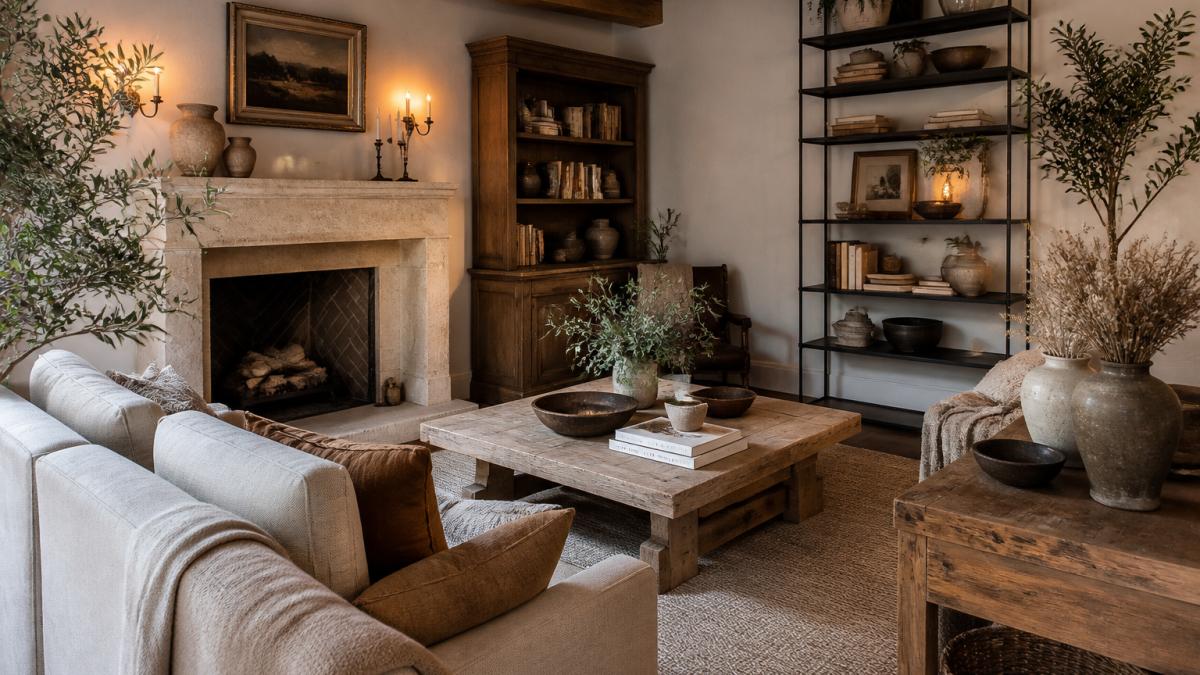
Start with your anchor piece. This might be a reclaimed wood coffee table, a substantial vintage sofa, or a stone fireplace surround. Everything else radiates from this foundation.
Textiles create warmth and softness. Layer linen throws over seating. Add wool area rugs in neutral tones. Linen curtains in cream or soft gray filter light beautifully and enhance the rustic aesthetic.
Lavender & Grains Rustic Bouquet →
Lighting transforms the space. Wall sconces with warm bulbs flanking a mirror create ambient glow. A contemporary floor lamp with natural linen shade bridges rustic and modern. Avoid overhead fixtures, they flatten the space.
Accessories should be sparse and meaningful. A hand-woven rattan and clay vase with distressed finish from Che Bella Casa serves as both functional vessel and sculptural element.
Plants bring life and softness. Large potted plants in corners add verticality. Trailing plants on shelves soften edges. Dried botanicals in vessels (like our Lavender and Grains Rustic Bouquet) add texture without requiring maintenance.
Dining Space: Creating Warmth and Gathering Appeal
Dining rooms are where European rustic style invites people in. This space should feel generous and welcoming.
A substantial wooden table is essential. Reclaimed wood with visible grain and natural edges works beautifully. Pair it with mixed seating, vintage wooden chairs, contemporary upholstered chairs in neutral linen, perhaps a simple bench.
Lighting above the table sets the mood. A simple pendant fixture or chandelier in aged metal creates focal point and warmth. Avoid modern track lighting, it reads as too contemporary for this style.
Table styling should be restrained. A simple runner in neutral linen or jute. A centerpiece of dried grains or fresh flowers in a rustic vessel (our Tuscan Country Bouquet works beautifully here).

Wall treatments matter in dining spaces. Exposed stone, whitewashed brick, or neutral plaster all enhance the European rustic narrative. If walls are painted, warm neutrals work best.
Textiles soften the space. Linen napkins in cream or natural tones. A linen runner down the table center. Curtains in soft, natural fabrics. These pieces develop character with use, wrinkles and slight fading are features, not flaws.
Common Mistakes to Avoid When Mixing Styles
Most people stumble when trying to mix European rustic decor with contemporary elements. Understanding common pitfalls helps you navigate confidently.
Too many wood tones in one space. Honey wood, dark walnut, light ash, and gray-toned wood in the same room creates visual chaos.
Overstuffing with accessories. European rustic thrives on restraint. A room crowded with decorative objects feels cluttered, not curated. Choose fewer pieces and give them breathing room.
Mixing rustic with ultra-modern. A heavily distressed wooden table beside a sleek glass and steel console reads as intentional.
Ignoring scale and proportion. A tiny vintage mirror above a massive contemporary sofa creates visual imbalance.
Using wrong lighting. Harsh overhead lighting or cool-toned LEDs drain warmth from European rustic spaces. Warm, layered lighting is non-negotiable.
Neglecting textiles. Hard surfaces alone feel cold and incomplete. Linen, wool, and cotton textiles add softness and warmth. They're not optional, they're foundational.
Forcing contemporary pieces into rustic spaces. Not every modern item belongs in a European rustic room. Shiny finishes, bright colors, and sleek lines can disrupt the aesthetic.
Sourcing Authentic Pieces and Budget-Conscious Prioritization
Finding genuine European rustic pieces requires patience and strategy. Not everything needs to be antique or expensive to feel authentic.
Prioritize anchor pieces. Invest in quality where impact is highest. A substantial wooden table, a genuine vintage sideboard, or a statement textile deserves your budget.
Mix sources strategically. Antique shops and estate sales yield genuine vintage pieces. Contemporary makers produce new rustic-inspired items. Blend both.
Look beyond obvious sources. Architectural salvage yards offer reclaimed wood, aged hardware, and authentic materials.
Understand what justifies investment. Hand-thrown ceramics cost more because they're individually made. Reclaimed wood costs more because of sourcing and milling.
Budget allocation framework:
- 40% on anchor furniture pieces
- 25% on quality textiles and upholstery
- 20% on accent pieces and ceramics
- 15% on lighting and hardware
Start small if budget is tight. A single beautiful ceramic vessel matters more than a room full of mediocre pieces. Build gradually. Quality compounds over time.
Watch for reproductions. Mass-produced "rustic" pieces often lack authenticity. Visible handwork, slight irregularities, and natural material variation distinguish genuine pieces. If something looks too perfect, it probably is.
Mixing European rustic decor successfully requires understanding the style's core values: authenticity, restraint, and natural beauty.
Frequently Asked Questions
What's the difference between European rustic, farmhouse, and French country decor?
European rustic emphasizes aged materials, earthy textures, and historic character inspired by countryside estates across Europe. Farmhouse style is more casual and American-influenced, focusing on simpler, weathered finishes. French country blends rustic elements with refined details and softer color palettes. European rustic typically feels more layered and textured, drawing from specific regional traditions rather than a general 'countryside' aesthetic. The key distinction is authenticity to European heritage and craftsmanship traditions.
How do I prevent European rustic decor from making my space look dated?
Balance aged pieces with contemporary accents and clean lines. Incorporate modern lighting, streamlined furniture, and neutral walls to create contrast. Layer textures rather than overwhelming the space with heavy, ornate items. Use strategic color blocking with earthy tones and muted neutrals. Add plants and fresh florals like the Tuscan Country Bouquet to bring life and movement. The goal is visual interest through balance, not a museum-like frozen-in-time feeling. Modern artwork or minimalist shelving can also anchor rustic pieces in the present.
Can I mix European rustic decor with modern furniture in a small space?
Yes, but prioritize scale and proportion. In smaller rooms, use fewer statement pieces and let negative space breathe. Choose one or two rustic focal points (like a wooden console or aged mirror) and keep surrounding furniture contemporary and streamlined. Avoid oversized rustic items that crowd the room. Light colors and minimal clutter amplify the sense of openness. Layered lighting and vertical storage help maintain the refined, inviting feel without sacrificing functionality. The key is restraint and intentional placement rather than abundance.
What should I prioritize first when starting to mix European rustic decor?
Begin with your color palette and large furniture pieces. Establish a neutral foundation with walls, flooring, and primary seating in earthy, muted tones. Then layer in rustic accents like wood, stone, and natural textiles. Add aged ceramics and hand-woven pieces gradually to test the balance. Florals like the Lavender & Grains Rustic Bouquet work well as affordable accent pieces to test your palette. This approach prevents costly mistakes and allows you to adjust proportions and contrast before investing in statement pieces.