

European Countryside Decor Shopping Guide 2026
Table of Contents
- What Defines European Countryside Decor
- European Country Decor: Regional Influences and Styles
- Materials, Colors, and Textures for Authentic Countryside Living
- European Country Living Room Ideas: Furniture and Layering
- Antiques, Vintage Finds, and Authenticity Checks
- Where to Shop: Budget Tiers and Sourcing Strategies
- Buying European Pieces: International Shipping, Returns, and Quality Assurance
- Conclusion
- Frequently Asked Questions
Last Updated: October 5, 2026
What Defines European Countryside Decor
European countryside decor is a design aesthetic rooted in the authentic, lived-in charm of rural estates and village homes across Europe. It prioritizes natural materials, weathered finishes, artisan craftsmanship, and a sense of timeless elegance that feels both refined and inviting.
At Che Bella Casa, we curate pieces that embody this philosophy. Our selection focuses on items that tell a story: hand-woven textiles, sculptural ceramics, and made-to-order furniture sourced from artisans who understand that true luxury lies in quality and authenticity, not novelty.
The core of European countryside decor rests on five pillars: natural materials (wood, stone, linen, clay), regional design influences that vary by country, a warm neutral color palette, weathered or distressed finishes that suggest history, and a commitment to mixing old and new. This isn't about recreating a museum room.
What makes this aesthetic endure is its flexibility.
European Country Decor: Regional Influences and Styles
French Country Decorating Ideas and Aesthetic
French country design emphasizes elegance without ostentation.
Key characteristics include skirted furniture that softens hard lines, whitewashed or cream-painted wood, and an abundance of natural light. Textiles play a starring role: linen curtains, quilted throws, and embroidered cushions layer warmth without heaviness. Antique mirrors, vintage chandeliers, and salvaged architectural elements (doors, shutters, mantels) anchor rooms with history and character.
The French country approach values restraint. A room should feel curated, not cluttered. Each piece earns its place through quality, patina, or sentimental value. Accessorizing means choosing a few meaningful items, a collection of blue-and-white ceramics, a stack of leather-bound books, fresh lavender in a simple vase, rather than filling every surface.
Mediterranean Home Decor and Coastal Elegance
Mediterranean home decor draws inspiration from the sun-drenched coastlines and hillside villages of Italy, Spain, Greece, and southern France. This aesthetic celebrates warmth, color, and an outdoor-indoor lifestyle. Terracotta, stone, and stucco dominate the material palette, while warm ochres, dusty blues, sage greens, and burnt oranges infuse rooms with the landscape's natural hues.
Mediterranean interiors embrace arched doorways, exposed beams, and tiled surfaces that echo centuries of regional building traditions. Furniture tends toward substantial, handcrafted pieces with curved legs and carved details. Textiles include hand-loomed fabrics, embroidered runners, and richly patterned rugs that add visual depth and cultural narrative.
Coastal elegance within this tradition emphasizes lighter, airier versions: whitewashed walls, simple wooden furniture, and an emphasis on natural light and ventilation. The goal is to capture the feeling of a seaside villa, breezy, sun-warmed, and effortlessly sophisticated.
Belgian, Italian, and Scandinavian Influences
Belgian countryside design occupies a middle ground between French restraint and Mediterranean warmth. It favors neutral, earthy tones, substantial wooden furniture with clean lines, and a focus on comfort and livability.
Italian country style brings drama and richness. Expect deep color accents, ornate carved wood, decorative ceramics, and a willingness to layer patterns and textures. Italian countryside homes celebrate regional craftsmanship, hand-painted tiles, wrought iron, and sculptural furniture, with a confidence that feels both historical and contemporary.
Scandinavian countryside design strips the aesthetic to essentials: light wood, soft linens, minimal ornamentation, and an emphasis on functionality and durability. The palette is cool and restrained, whites, grays, soft blues, and natural wood tones. Pieces are designed to last generations, with clean lines and honest construction.
Materials, Colors, and Textures for Authentic Countryside Living
The authenticity of European countryside decor depends entirely on material choices. Natural materials age beautifully, developing patina and character that synthetic alternatives cannot replicate. Wood, whether reclaimed, distressed, or naturally weathered, forms the backbone of most countryside interiors.
Weathered finishes are not shortcuts; they're honest representations of how homes actually live. A whitewashed table that shows wear, a linen cushion that softens with washing, a terracotta pot that develops a chalky patina, these elements signal quality and authenticity.

The color palette should feel drawn from nature. Warm neutrals, cream, taupe, soft gray, warm white, and soft ochre, form the foundation.
Texture layering creates visual interest and tactile richness. Pair smooth ceramic with rough linen, polished wood with distressed finishes, and matte surfaces with subtle sheen. This contrast prevents rooms from feeling flat or one-dimensional.
European Country Living Room Ideas: Furniture and Layering
The foundation of a countryside living room is substantial, well-made furniture chosen for longevity rather than trend. European country living room ideas emphasize pieces with curved lines, turned legs, and visible joinery that speaks to craftsmanship.
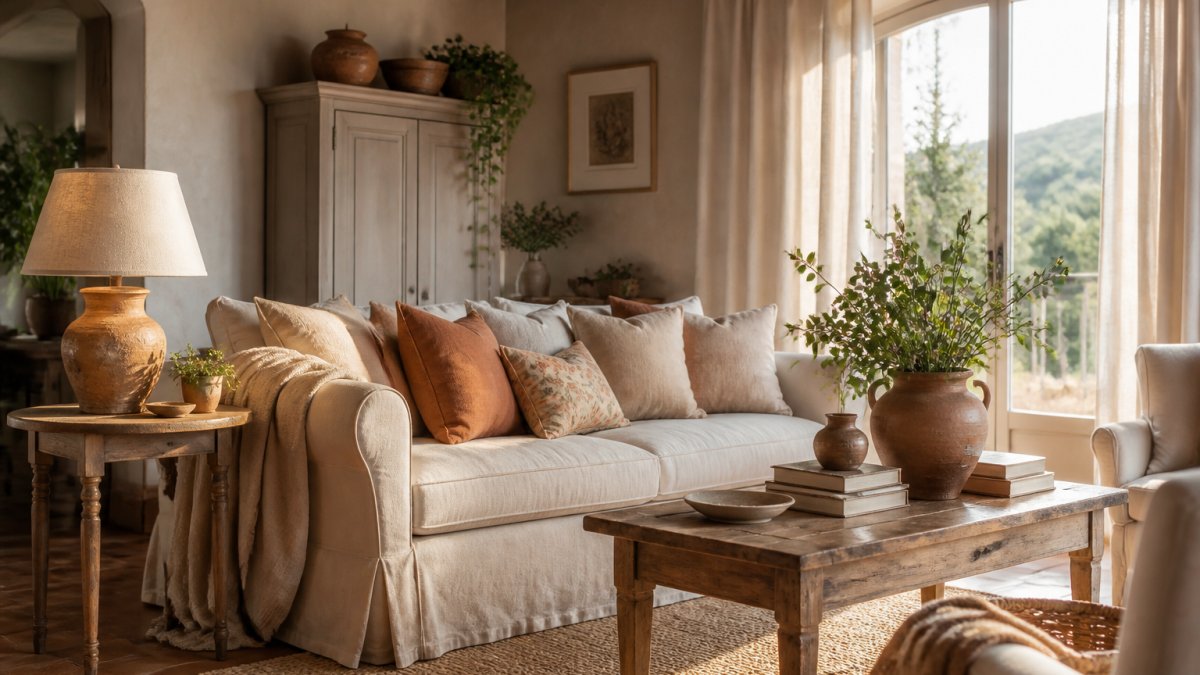
Layering is the strategy that transforms a room from decorated to collected. Start with a neutral base: walls in soft white, cream, or warm taupe. Add substantial furniture pieces, a sofa, chairs, a wooden coffee table.
The goal is visual depth without clutter. Each layer should be intentional. A room might feature a cream linen sofa, layered with pillows in cream, soft gray, and a subtle pattern, topped with a wool throw.
Lighting matters tremendously. Natural light through linen curtains creates the soft, diffused glow that countryside interiors require.
Antiques, Vintage Finds, and Authenticity Checks
Sourcing authentic antiques and vintage pieces requires knowledge and discernment. European countryside decor gains its character from genuine aged pieces, not reproductions designed to look old. When evaluating an antique or vintage find, examine construction, materials, and signs of actual use.
Hand-Woven Rattan & Clay Vase, Distressed →
Construction quality reveals whether a piece was made to last. Look for solid wood joinery (mortise and tenon joints, dovetail drawers), hand-carved details, and evidence of skilled craftsmanship.
Materials tell a story. Genuine linen develops a soft patina with washing; synthetic blends don't. Hand-thrown ceramics show variations in glaze and slight asymmetry; industrial reproductions are uniform.
When purchasing from antique dealers or online marketplaces, ask questions: What is the piece's provenance? Has it been refinished? Are there any repairs? Reputable sellers provide detailed photographs, construction details, and honest assessments of condition.
Where to Shop: Budget Tiers and Sourcing Strategies
Building a European countryside decor home doesn't require unlimited funds, it requires strategic sourcing and patience. Different budget tiers offer distinct advantages.
Budget tier: Entry level ($30-150 per piece) Smaller decorative items, textiles, and accent pieces fit comfortably here. Che Bella Casa offers pieces like the Hand-Woven Rattan & Clay Vase, Distressed ($36) and the Textured Terracotta Pot ($39), which provide authentic artisan character without major investment.

Budget tier: Mid-range ($150-600 per piece) Quality furniture, larger decorative ceramics, and substantial textiles occupy this range. The Set of 2 Barnwood Serving Trays with Handles ($85) and Set of 2 Rustic Wood Plant Holders with Metal Accents ($47) exemplify pieces that anchor a room's aesthetic at accessible price points.

Budget tier: Investment ($600+) Major furniture pieces, sofas, substantial dining tables, made-to-order custom pieces, justify larger investment. Che Bella Casa's made-to-order furniture allows customization to suit your specific space and aesthetic vision. These pieces become anchors that define a room for decades.
Sourcing strategies: Local antique shops and estate sales offer discovery and the ability to inspect pieces in person. Online marketplaces (specialized antique platforms, curated retailers like Che Bella Casa) provide broader selection and convenient delivery.
Buying European Pieces: International Shipping, Returns, and Quality Assurance
Purchasing European countryside pieces internationally requires attention to logistics, quality assurance, and protection.
Shipping and customs considerations: International shipping adds cost and complexity. Understand the seller's shipping policy. Shipping costs for substantial furniture can rival the item's price.
Quality assurance and inspection: Reputable sellers provide detailed photographs from multiple angles, close-ups of details and finishes, and honest descriptions of condition. Request additional images if you have questions.
Returns and protection: Understand the seller's return policy before purchasing. Some retailers offer returns within 30 days; others have stricter windows or restocking fees. International returns are expensive; clarify who bears return shipping costs.
Building relationships: Repeat purchases from trusted sellers reduce risk. Retailers like Che Bella Casa, which specialize in curated European-inspired pieces, provide consistent quality, clear policies, and customer support that simplifies the buying process.
Conclusion
Building a home rooted in European countryside decor is an investment in pieces that reward you with years of beauty and utility. The aesthetic demands intentionality, choosing quality over quantity, authenticity over trend, and timeless materials over fleeting fashion. It requires patience to source genuine antiques, understanding to evaluate craftsmanship, and strategy to balance budget with aspiration.
At Che Bella Casa, we've curated a collection that embodies these principles. Our hand-woven textiles, sculptural ceramics, and made-to-order furniture are chosen for artisan traditions and quality craftsmanship. Each piece transforms everyday spaces into beautifully lived-in retreats, creating homes that feel refined and inviting for years to come. Explore our collection and discover how authentic European countryside pieces elevate your personal living ambiance.
Frequently Asked Questions
What exactly defines European countryside decor?
European countryside decor blends regional traditions, French farmhouse charm, Italian rustic warmth, Scandinavian minimalism, and Belgian artisanal craft, into interiors that feel lived-in and timeless. It emphasizes natural materials like linen, wood, and stone; weathered finishes that show patina; handcrafted details; and a palette of warm neutrals and earthy tones. The aesthetic prioritizes authenticity and craftsmanship over mass production, creating spaces that honor generational homestyle and regional design heritage.
How do I know if antiques and vintage pieces are authentically European?
Authentic European antiques show markers of age: uneven hand-finishing, period-appropriate joinery, regional wood types, and wear patterns consistent with decades of use. Request documentation of provenance when buying from dealers. Examine maker's marks, construction techniques, and material quality, European artisans typically used superior wood and linen. Be wary of items that appear artificially distressed or lack construction details matching their claimed era. Reputable antique dealers and specialized European sourcing platforms provide authenticity guarantees and detailed condition reports.
What's the difference between European countryside decor and farmhouse style?
European countryside decor draws from specific regional traditions, French, Italian, Belgian, Scandinavian, with emphasis on artisan craftsmanship, imported materials, and authentic regional aesthetics. Farmhouse style is a broader American interpretation that simplifies rural themes. European countryside pieces tend to be higher quality, more refined, and rooted in specific cultural design languages. Farmhouse often uses mass-produced reproductions, while European countryside prioritizes genuine antiques, made-to-order artisan work, and heirloom-quality pieces designed to last generations.
Where should I invest money when shopping for European countryside decor?
Prioritize investment in foundational pieces: quality sofas and upholstered seating (which anchor rooms and endure daily use), solid wood dining tables, and authentic antique or artisan-made accent furniture. Textiles, linen curtains, wool rugs, and hand-woven throws, deserve significant budget allocation because they define comfort and visual warmth. Decorative ceramics, vases, and smaller artisan pieces can range from $36-$85 and deliver high impact. Skip mass-produced 'distressed' reproductions; instead, allocate budget toward fewer, higher-quality pieces from curated sources that guarantee craftsmanship and durability.
Can I mix European countryside decor with modern furnishings?
Yes. Modern comfort paired with European countryside aesthetics creates sophisticated, livable interiors. Pair antique wooden tables with contemporary upholstery in natural linen. Mix weathered ceramic pieces with clean-lined modern shelving. Layer traditional textiles, hand-woven rugs, linen throws, over minimalist seating. The key is balance: let European countryside elements (natural materials, artisan details, warm tones) define the visual character while modern pieces provide functionality and comfort. This blend feels refined rather than dated, honoring both timeless design and contemporary living.
What's the best way to source European countryside pieces if I'm buying from abroad?
Start with curated online retailers specializing in European decor and artisan pieces. Local antique dealers and regional artisans often ship internationally; email directly with photos of your space and style preferences. European online marketplaces and artisan platforms offer direct access to makers. Factor in shipping costs, potential customs duties, and return logistics before committing. Reputable sellers provide detailed photos, material specifications, and return windows for peace of mind.
Is French country decorating still on-trend in 2026?
French country remains a foundational aesthetic in 2026, though it's evolved beyond dated reproduction pieces. The trend now emphasizes authentic French regional traditions, Provençal warmth, Normandy simplicity, Loire Valley elegance, paired with modern comfort. Curated antique finds, artisan textiles, and genuine farmhouse furniture are more desirable than mass-produced 'French country' reproductions. The aesthetic endures because it's rooted in timeless design principles: natural materials, refined simplicity, and generational craftsmanship. Expect to see it layered with contemporary elements rather than applied as a complete period room.
What materials and colors work best for European countryside decor?
Natural materials define the aesthetic: solid wood (oak, walnut, chestnut), stone, linen, wool, and hand-thrown ceramics. Colors center on warm neutrals, cream, soft ochre, warm gray, terracotta, sage green, and muted blues inspired by regional landscapes. Weathered and patina-finished surfaces add authenticity. Layer textures: rough-hewn wood against soft linen, smooth ceramic against woven rattan. Avoid high-gloss finishes and bright synthetics. The palette should feel drawn from nature and regional earth tones, creating spaces that age gracefully and feel connected to countryside heritage.